
Real Working Caregiver Stories
Actual working caregivers share their stories.
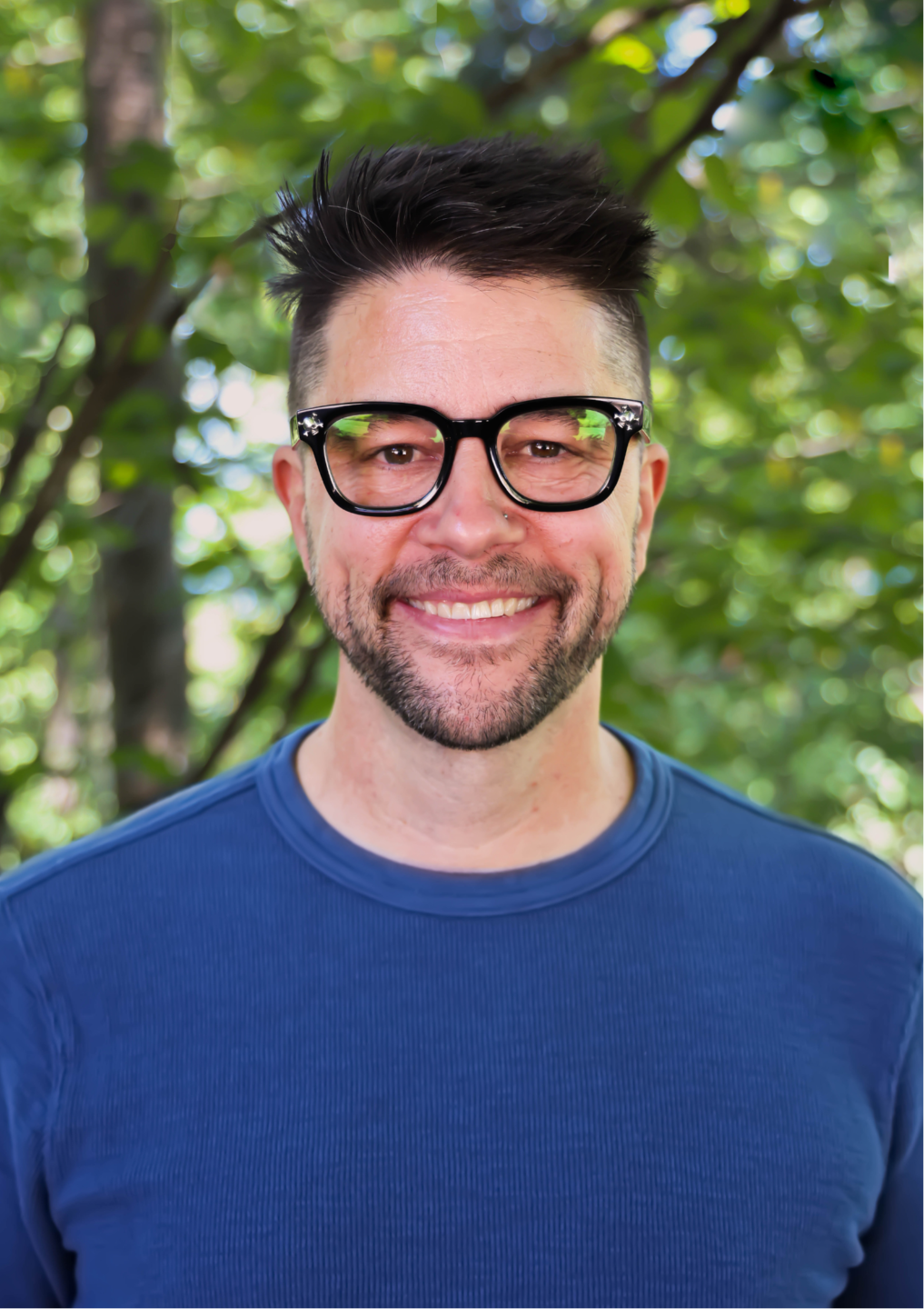
Stories From Real Working Caregivers: Mike Halekakis
Zack: Good morning, good afternoon, good evening, from wherever you're checking us out. Thank you for checking us out. This is Working Caregivers' Real Stories from working caregivers. I'm Zack Demopoulos.
Selma: I'm Selma Archer.
Zack: I'm really excited. We have somebody here who's pretty unique. Not only is he a male caregiver, but he was a caregiver from a young age, and he's a fellow Greek, Mike Halekakis! Hey, Mike, how are you?
Mike: Hi, Zack! Hi, Selma! Nice to be here, thanks for having me.
Zack: Thanks for being here, we appreciate you. He's also out on the West Coast, too, right? Aren't you on the West Coast?
Mike: Yes, I'm in the Seattle area. Beautiful, sunny Seattle. It is, what are we in? Just starting September, perfect weather, it's gorgeous, please come visit. What they've told you about the rain is completely overblown. I think they just say that to keep more people from moving here. Yes, West Coast.
Zack: I'm glad to hear you say that, because it's probably a first for somebody from Seattle to say that, so thank you for bringing things into perspective. I believe you….
Mike: Yes, I'll tell you, just real quick, the one thing that isn't overblown is the fact that in the winter, it's pitch black by, like, 4 o'clock… So, we are in, you know, northern latitude, seasonal affective disorder is real here, but the rain is not the worst part, it's the dark that'll get you.
Zack: Well…Glad it's still light where you are right now, because I know this is early for you, so thanks for being here, Mike. We really appreciate it. Selma and I are just excited to talk to you, so let's jump right into it, and we'd like to open up by asking you if you could briefly share with us your caregiver journey. And again, as I mentioned in the beginning of the show here, you're very unique to us, so we're really looking for this unique perspective, both as a young caregiver, as well as a male caregiver, if you could kind of weave that into your tale.
Mike: Yes, you got it. So, my caregiver journey really is kind of three-pronged and starts in the late 1990s, my mother got colon cancer in, I want to say it was about 1998, and it was… I won't bore you with all of the esoteric details of that journey, but it was extremely severe. It was a deep hardship for myself and for my dad, and that was really the beginning of the caregiving for me. But my mom was this unique, beautiful, rare, amazing human being, where she kind of had one of everything, and nothing could take her down. And what I mean by that is, you know, that was cancer round one, which she did survive, and she was a cancer survivor. But she ended up having cancer two more times, during the course of her life, and COPD, and emphysema, and she had a heart condition, and she had diabetes, and I'm gonna stop there. I could continue to enumerate conditions for you, but I think you get the point.
And, this month is going to be the two-year anniversary of her passing. She made it very close to her 80th birthday, which was a surprise to me and everybody who knew her. I also mention that because I was at it for a really long time, as was she obviously, and my dad. I took care of her off and on for something like 25 years. Those last few years in particular, she was bedridden, she wasn't ambulatory… she never lost her mind, she was brilliant. But the rest was a challenge, and I actually quit my job to take care of her through the entirety of her hospice journey. She made it almost a full year. I live in the Seattle area, as mentioned, but my dad and her lived two hours south in Aberdeen, Washington, and I would make that trip once or twice a week for I mean, it was… it was years, but the last year was regular, and maybe spend a day or two days home a week at the most, if I did. Which, as you probably understand how this goes, some…
My wife and I have an absolutely outstanding relationship. She's my best friend. She is also a nurse. She works at the University of Washington Medical Center, could not be more supportive. We have a jealousy-inducing 10 out of 10 relationship, but it was hard on us, as you can imagine. That kind of brings me to now. My dad is 86, all things being equal, for an 86-year-old man, he's doing great, but there's absolutely continued care and discussion about what the future looks like. He lives alone. He's got a girlfriend, which I absolutely love. There's a whole dating history going on there, so that's a new phase of life for him.
But also, in the context of my journey, you know, I created a multi-hour training course on caregiving. I have, engineering, marketing, and curriculum development background, so I did spend some time both navigating my journey and also creating materials around it. I just published a book on Kendall related to caregiving called From Hospital to Home, Everything You Need to Know About Caregiving. Zack, you and I have talked about this. I think there's a lot of us that are in the midst of that kind of journey, and start to wonder how they can meld personal and professional experience, and maybe help others. So, that's also been a component of… my journey and how I got to where I am today.
Zack: We're going to definitely get into a little bit more about your book. We don't want to give it all away. We want to encourage our viewers and readers to check it out, because I think it's a much-needed book, and we'll talk about that in a little bit. But, first of all, thank you so much for sharing your journey. I can see your love and respect for your mother, as we Greeks say, and may her memory be eternal. But also may her legacy continue to live on forever, which you're doing a great job. She has to be beaming down on you. But I gotta ask you, 25 years, wow, so you were pretty young. Can you just share with us, how did you manage being a student at school? Trying to live a life where you're playing with your friends, and then getting out of college, and then coming out of college, and getting a job. How did you manage that personal and that caregiving life? And then when did you also realize that you were a caregiver? Because most of the time, we don't even think about that, right?
Mike: Boy, those are profound questions. Well, first of all, I actually took a little bit of a different path. I was going to school out of high school, and I graduated in 92, from high school, and I started work in tech, in the Silicon Valley, where myself and my parents were living at the time… and so I was double music and English major, but I decided pretty quickly when Apple wanted to hire me that maybe that was going to be a better, easier life path for me, professionally. The reason that I tell you that is because by the time mom got sick, I was deep into the first phase of my career as a software engineer.
It was a melding of the personal life and the professional life with some caregiving. In that very first round… I was not living with my folks at that time. I was up in San Francisco, they were down in San Jose, and so it got me started early in the making of the trips back and forth. For better or worse, my poor dad was the one that was more on the hook for the daily part of that first section of caregiving across the 25 years.
I don't think it was until my parents made a move up into Washington state that I really felt, oh, I'm becoming more of a primary caregiver. Also, as my parents made that transition, as many people do… into an age of being… elderly, needing more support… like in tech and also tech support, like, navigating insurance companies, and navigating the healthcare system, and needing a strong advocate for better outcomes and so forth. That portion happened a little bit later for me. So it was really getting the taste when I was young, and I'm also an only child, so there's only me… And being there to support my dad, and being there for my mom, who I love, to more of a day-to-day role, that happened on a curve, over the course of, really, months and years.
Zack: Can you remember when you actually used the word caregiver?
Mike: Oh, gosh. I think it was probably 15 years ago now. It's hard to remember when the… Was there an event? …shift really happened. Well, yeah, I mean, I think…You know, my dad, gratefully, has also had relatively good health, but then my dad also had some health things as well. And he being more primary to my secondary, I had to come in and be primary across both, and yeah, that really started 15-ish years ago, is when I can think of that first becoming part of my regular lexicon. To say the word caregiver.
Selma: Mike, when you were a caregiver, you were working, I think you said Silicon Valley. Fighting that traffic, and going and taking care of your mom as well. Did anyone at work know what you were going through? Did they have any idea, or were you just one of the many invisible caregivers that had this whole other job when they left work, went right into a whole other job of caring?
Mike: Yeah, what a wonderfully insightful question, because I know there's so many of us, right, that have gone on that journey. I mean, the answer is… is no. Nobody knew in the earlier part of my career, especially… I kind of had two rounds… I worked at multiple companies. I worked at Apple through some part of that, and then I worked at Microsoft as a senior leader, and nobody knew that I was doing this, managing components of a $20 billion business, and then also managing care for my folks… One area of great fortune for me in the career that I've had is that I've kind of consistently for most of the jobs that I've had, had the ability to do some telecommuting, and… I can take space to go do things that are a necessity. Then in the back half of my career, I'd say the last 13 - 14 years, I've worked entirely out of the home office and have not had to go into an office with regularity, which is a gift. I recognize that there are so many people that do not have that ability… for instance, as I knew my mom was coming up to her hospice journey, I was able to spend more and more time working out of my parents' house. I also didn't mention I was married before and my ex went through a very traumatic experience that required her to be in the hospital for months. I took the lead, having some experience in coordinating that, coordinating friends and so on. I did that very simultaneously, and the same with my mom while working.
I'm grateful too that… having worked for however many years, small decades, and the last part, the last 10, 13 years of my mom's journey, I was at a senior enough level talking to the owner of the business that I was working with, that I could have a very direct conversation to say, this is what is happening, this is a part of my life that if I'm slow to respond for any reason, that's because I'm in the hospital today.
My mom would have bouts, literally, where she was in the hospital for months at a time. And then…as these things go, going into skilled nursing for a period of time before we could get to the home part again… a lot of sitting in hospital rooms with a laptop on my lap, and trying to context switch appropriately, which… feels like hero work now. It felt like less of a big deal at the time, but, you know, hindsight softens some of that, but it's non-trivial.
Selma: My goodness. So at some point, you were actually caring for two individuals at the same time.
Mike: Yeah, there was a stretch there.
Selma: As you look back, how do you think your caregiving experience has changed you from a personal perspective, not just as a son or husband and family member, but also in terms of your business, your leadership, your business perspective, do you think that your experiences have changed?
Mike: Oh, without question, and significantly. Maybe I'll talk personally first. I mean, I think… having been mired in caregiving, and I'll blend some professional, also having written extensively on the topic, like the two of you, I've talked to many other caregivers, I've talked to medical professionals, my wife is a medical professional. Being sort of mired, right, wrong, or indifferent, in those spaces… I don't know if this does this for everybody, but for me, it certainly gave me a different perspective on death and dying, which I'm carrying into the rest of my life. One way that shows up is that my wife and I have very cogent conversations about… what do things look like for us? And we don't have kids, and we aren't planning to, so what does that mean for us as we get older? What does it mean if one of us walks out the front door and a tree falls on our head tomorrow?
So there's a planning element that I'm very comfortable with … the ticket that we all buy, the small print, I have read several times about death and dying and I get it. And it informs how I show up in the world… I have the deep sadness that comes and the grief that comes, but I also have a balance, this is part of the journey perspective. That helps the grief process a lot.
And then professionally speaking… I put the book out to kind of put a pin in that part of my life for a second, and also because I made a promise to my mom, who was such a fan of me doing this type of work, that it would continue when she was gone. But I did spend a good five years, six years of my life thinking about how could I perhaps become a professional in the space, and have made a conscious decision at this stage that that is not going to be a primary focus for me…
My personal choice, I just don't want to continue to operate in this space day in and day out, and I have so much respect for people who do. But it has made me the “go-to” expert for friends, family, networking contacts, friends of friends who are thinking about end-of-life planning, or they're, like many of us my age, mom and dad are getting older, and maybe they're getting sick, and how do I think about nursing homes, and how do I think about next steps, and all of that. I'm very honored to help play that role for others, but would I have that without this experience? Absolutely not. It's changed me in the core of who I am.
Selmaarcher: In your more than 25 years of being a caregiver, what skills do you think you now have that you would not have had had you not experienced the caregiver journey? We ask people that often because we encourage them to put their care experience on their resume.
Mike: Yes, that's great.
Selma: So, what do you think you would put in your resume that you learned because you were a caregiver?
Mike: Yeah, it's interesting to try to frame it in a professional sense. Maybe before I do that, I'll just talk about the personal… my level of compassion, communication, ability to effectively and clearly advocate and navigate the absolutely garbage U.S. healthcare system that we're all a part of in this country, has grown by leaps and bounds. I feel like my ability to drive, and maybe I am getting into the professional here, but my ability to drive better outcomes in the space of ambiguity with high stakes is much stronger as somebody who's been a caregiver than it would have been with just raw professional experience. Because you know, talking to insurance companies who are not as interested in paying you as they are in their own financials, and working with very, very well-meaning, complex medical systems, hospitals with lots of different roles, and different, people that are in different stages, different personalities, and to get to better medical outcomes… that's non-trivial project management style work and it's people work, and that, absolutely, I've benefited from that experience and take it into my professional life.
Selma: Thank you.
Zack: Thanks for sharing it, Mike. I would argue that the personal and the professional are interchangeable, so compassion, communication, advocacy, I think any leader would want somebody like that on their team working. So, I love it. I love that you shared those skills. When I ran a home care business for 13 years, one of the most common phone calls we'd get on Friday was the panicky, mortified, unprepared family member that said, I was just told my parents are going home from the hospital. Please help us. Some of them even cried on the phone. So, you wrote a book about that, which I'm so happy to see. Was there a specific experience that maybe you could share that kind of compelled you to write this, besides the fact that you promised your mom, which I love that story. You know I'm sappy, right? That you promised your mom that you would continue, I love that, but was there an experience that you want to share?
Mike: I mean, Zack, you and I are going to be fast friends, being marshmallows together in that regard. I'm also sappy. I think it's more of a pragmatic answer than a deeply emotional one is… I had… a lot of experience that I was gaining from running an e-com business that was very focused on info products. So self-help kind of products across a wide variety of things, and I was pondering, having seen, having worked with a business owner who's hugely successful in that space, what do I know? I love to write, too. I mean, I'm fiction, nonfiction, writing is a big core…
And I haven't mentioned to this point, and I've done her a disservice in this regard, but I had a co-founder who's also a dear friend of mine, Kimberly, who has just as much caregiving experience as I do, different because we all have our own journeys, but, she's somebody who was also my roommate at the time, and we got to talking on this very subject, and came to, wow, we both have an enormous amount of experience in caregiving, end-of-life planning, doing post-death estate management, and so on. And she's also a writer. Wouldn't it be great if we could translate that into a sphere that could help people?
And also, and I think this is fairly common for those of us who have been in business for a good long time and have worked at corporate and so on, probably a lot of us get to, how can I use my powers for good at this stage, and how can I do something noble that would actually make a difference for people?... It wasn't any specific thing with mom's care, or a specific thing with my caregiving journey, it was, wow, maybe I'm reaching a point where all the aspects of my life are converging.
Zack: Well, shout out to Kim, your co-founder. You know, it's ironic that Selma and I have a very similar story. That's how the two of us got together, sharing our caregiver journeys together. So, I love that story. Your book is called From Hospital to Home, Everything You Need to Know About Family Caregiving. So, the last question I want to ask you about your book is, let's say that phone call… no, no, better yet, let's say your parent was just admitted to the hospital, or your spouse, or whoever it is you may be caring for, and somebody tells them to read your book. What are three things briefly, that you would hope that they would be able to pick up from your book that's going to help them on this tough journey they're about to get into.
Mike: So… I'll do my best briefly, so you know how that goes… I tried to be as comprehensive as I could while being as accessible as I could… The way that I tried to tackle accessibility was by having some quick start and some basic questions that I thought were representative of people's situations that would then, if you have the Kindle version, link directly to, possibly the chapters and subsections that would be relevant to your situation. So the first thing that I would want anybody to do is to start at the beginning and get the quick start and see… Can you quickly move to the area that is relevant to you? Because all of our journeys are quite different. I have a section right at the beginning about thinking through and making hard decisions, and I think that's something that… it's not… I mean, you could apply it to lots of things in life, but it's one of the the hardest things about early caregiving is the feeling of deep overwhelm, and I don't even know where to start.…
Taking a breath and thinking through how can I begin to think about the thing that's right in front of me and make some decisions that I feel good enough about, is one of the most important things. And then in the book, I have a section for kind of everything. So I have a section for working with hospitals, I have a section for working with insurance companies, understanding Medicare and on and on and on and on, and I have a deep index. So the other thing that I would hope, you know, specific to, oh my gosh, my parents just got out of the hospital, what do I do, is that. You can look at the index and see, oh, for when your parents get out of the hospital, here's where to start, because that kind of thing is directly stated in the book… I talked to lots and lots of caregivers, I talked to lots of medical professionals, legal professionals, and so on, and I did what I could, and trying to capture every last possibility is really tough.
The other thing that I would tell anybody, though, is, boy, we're living in the modern age. You're not alone. There are millions upon millions of us. If you're a man doing this, congratulations, you're finally in a minority of people, because it's mostly women doing this. But there are so, so, so many of us. There's so many support groups out there. There's so many folks like you all that have podcasts, don't just go it alone. Spend some time finding yourself a support group, check out podcasts like the ones that you two are doing. You don't have to read every part of a book like mine, but you could start… don't start from zero, it's not necessary. There's good material and good people out there, and just knowing that other folks are going through what you're going through and have done is hugely powerful. Trying to do it all yourself and put it all on your shoulders is, it's too much.
Selma: What is one thing you would tell somebody at the beginning of their care journey?
Mike: That's it. You're not alone. There are resources.
Selma: Because we can easily drift into these little bubbles, you know, where we think we're the only one going through this tough process. You said what you would tell someone else. What do you wish someone had told you at the beginning of your care journey?
Mike: Oh, boy. I think I would have liked to have gotten the same advice. But I would have wanted it even more forcefully than I said it. And it… for me personally, it would have been both, you don't have to go through this alone, and you don't know anything… everything, smart guy. So, yes, you are a reasonably smart human. Don't just rely on your smarts to figure it all out. There's help and assistance beyond what you can figure out on your own. That's what I would have wanted to hear. And whether, you know, that guy back there in his 20s would have listened to me or not, it's debatable.
That's the advice that I could have used from somebody who's been through this. And I guess the other thing might have been, it is impossible to predict where this ends, but it does. It ends. And, it's going to feel icky and ambiguous at times, and that's just part of the journey. That doesn't mean you're doing anything wrong. We're all there, we all go through that.
Selma: Yes. You just mentioned something. The process does end. And in your training guide, you talk about what we learned. You're talking about the end of life stages and the grieving after the caregiving, because a lot of times that's left out. People don't realize that it takes some time for you to get through, even after the person has left us you're still a caregiver. You're still dealing with those feelings. You're still trying to figure out how to fill that time that you used to have with that individual who's no longer here. So having said all that, what really motivated you to have this product to help families through the many stages of caring?
Mike: You said something super interesting that I also think is important for people to understand related to grief before I answer your second question, which is, I think we've been given the possibly well-meaning but false narrative about grief stages as being this linear process, and in my deepest opinion, it's not. Grief is potentially a circle with a pie chart… pie chunks that we come in and out of, and… it's all dependent on the individual… You know, my mom is never going to leave me, and I still have moments. It's only been two years for me. That's really early in a grief journey, but I think there will be moments ongoing where she'll come into my mind, and then I'll feel that pang of grief. Again, it diminishes over time, of course, but it's an ongoing process and an ongoing journey.
To answer… the question that I didn't answer was about what was the motivating factor?… I have never expressed it this way, so you're pulling something out of me that I think… it's been internal, and I'm externalizing that I feel a kindred spirit with folks like yourself. I feel that this is a connector… I enjoy the process of connecting with people, and I think one of the deepest motivators for me is this… this is part of our shared human experience. I think most of us will be touched in some way, shape, or form. Whether we're caregiving adjacent, it's a sibling that's doing the main work, and we're just, you know, helping, or we're changing adult briefs, and right in it, there's components of this that I don't know that very many of us will not experience in some way, shape, or form in our lives. I think that was a big motivator for me, is I just feel connected to folks, and I thought, if this is something that I know a thing or two about now through hard earned experience, maybe I can help at least one or two people not make some of the same early mistakes that I made.
Selma: If we take it to that next step, someone who's tuning in to us today, they're feeling quite overwhelmed because they are changing adult briefs, they're dispensing medications, they're keeping up with doctor's appointments, and going to the ER at 2 o'clock in the morning with their loved one. What is one thing that you would say to them today to help address that feeling of being overwhelmed? Like, this is just too much for me, I can't handle it.
Mike: That is the multi-million dollar question, right? That's the hardest thing for all of us. People are probably going to want to reach through their screen, or their bluetooth speaker, or their headphones, and punch me in the eye when I say this. But you cannot overstate some level of self-care. And what I mean by that is, that doesn't mean that you somehow figure out how to drop everything and go to Aruba. If you can figure that out, then more power to you. But you have to protect time… some time for yourself, whether it's meditation, or it's reading a book, or it's going and getting a cup of coffee and sitting down, or it's inviting friends over for a game night, or it's something bigger. Like I have a surrogate who can come in and I can take three days to drive to the coast. Or whatever it happens to be, you can only be the best caregiver for them and serve yourself if you are paying attention to yourself, too. And, I think that is… that's my number one. If you get nothing else out of advice on caregiving, that's absolutely my… my… it's not even one, it's… it's number 0.1. You have to give yourself some time and space, and you have to figure out, even if it's a few minutes a day, how to honor yourself so that you don't end up in the bed next to them.
Selma: Yes. And one of the things… one person said something once that really has stuck with me, and that is, we change one G word for another, and that is guilt to grace. We have to give ourselves some grace, and not feel guilty about stepping back and taking care of ourselves.
Mike: Yeah. Whoever said that is a wise human. I could not agree more. I'd say it's beyond grace that's essential to make you the best steward of their care.
Selma: Great, thanks, thank you.
Zack: Yes, and not only were they wise, but they had a lot of experience when she shared that with us, without a doubt. We're not going to make you put a dollar in the curse jar, because you used the word, self-care, but, I appreciate the way you positioned that. I hope folks are listening, because it is really important. We like to call it self-preservation, but it doesn't matter. Whatever you call it, I hope you'll play back Mike's words there. I think those were very, very helpful, coming from somebody who is, we are feeling your kindred spirit. We love that you love humans. We could talk to you forever, but we gotta wrap up. I do have one last question, and let's position this one to any employer that's listening right now, any manager, an HR person, you know, we're invisible, many of us are. You talked about the millions of caregivers. There's 63 million out there, actually and I forget the percentage… but I think maybe only 34% actually share their caregiving experience at work, to become visible. And in my own personal experience, when I did become visible, it was not good, and I went back to being invisible. So, what is one thing that could help somebody who is invisible become more visible to their manager or to the employer that working caregivers are carrying that load, the stress, their lives outside of work? What's one thing you could help an employer see, what do you think would be the most important thing?...
Mike: Boy, you two ask the hard-hitting questions around here. There's just no pulling of the punches on the tough questions. I'm… I'm here for it. But it's no fooling around on this podcast. Gosh, I'd almost, you know… I'm going to probably answer a different question than you asked with my answer, sorry. I'm worming out.
Zack: You're the guest. You're the guest, the guest is always right.
Mike: Great, now I feel like I'm powerful. Thanks for that. You know, I would say I would love for managers to… any more than any single thing to know about any single human's experience. That they're going through with caregiving, or any other facet of… because we all have, you know, if it's not caregiving, it could be many, many other things. I feel like some compassion training. I mean, the biggest thing that could be the gap, and it sounds, Zack, like maybe you ran up against this…and I get it, business is business. My personal ethos, you know, I'm a… I'm a senior leader, I've been a CEO, I've been a COO, and I really believe family first is important, and also, you will hear it's just business, and trying to reconcile those two things can be extremely challenging, but what I would… I'd love to see some level of basic… in addition to having an understanding of the metrics that you cited, which, okay, if we're going to try to get into business brains, let's talk metrics, raw data.
You know, your people may not be able to be the best that they can be to give you the productivity that you want if they're one of these 63 million that are doing this shadow job. Like, that's important to understand full stuff. But beyond that, can we get some compassion training, so that you don't just brush under the rug, or continue to make it invisible to them. You know, make invisibility the norm, versus we can have an open, honest conversation in a one-on-one, and give people the grace to say that this is a thing that I am going through, I'm doing my best for the company, and also, I have this giant thing happening in my life, and not make that a way to punish people in Type A organizations that are all about performance.That's a really tough problem to solve.
Zack: I saw what you did there. That was very acceptable. I love it. That was perfect. That was perfect. Thank you so much for that. Thank you for your time, for being here. I also will be amiss if I don't thank Anna Levwinowski, who introduced us. Thank you, Anna, so much for that.
Mike: Yeah, thanks, Anna. And Selma, and Zack, it has been a pleasure. I love what you all do a ton, as you know.
Zack: Don't go yet. We got one last question, which is the easiest of all of them. Again, this is Mike Halekakis, who's been just amazing, and we could talk to you for a couple hours. His book, From Hospital to Home, Everything You Need to Know About Family Caregiving, where can people find your book, and where can people learn more about you?
Mike: So, there's this little organization that you probably all have never heard of called Amazon.com, look it up. They own a small amount of traffic on the internet. The book is published currently as a Kindle edition, and I did that very specifically to start. A, because I'm kind of testing the waters with it, B, because it does provide an easy way to link across, as I talked about. I have…150 links to other resources external to the book as well. However, I am working on a print version of that as well, which will also be on Amazon. So that's the place. You can look it up, easy to find.
Zack: How about where can they find out more about you? Besides LinkedIn? Definitely, connect with Mike on LinkedIn. Is there anywhere else? Web page or anywhere?
Mike: Yeah, check out whatwelearned.com.
Zack: Thank you.
Mike: You can find information on me, you can find information on Kimberly, who I mentioned, and if you really would prefer, rather than a book, to have somebody help walk you through this in a master class style training course, then all of that information is also available in a pay whatever you like, from $0 to more than that, and you can, see the training course as well.
Zack: We'll put these links in our show notes, even the one to that little store that you mentioned, which I think they call themselves the largest bookstore on Earth.
Mike: Right, yeah, they're a bookstore.
Zack: You may not have heard of them, I don't know, but we'll put that.
Mike: I don't know if they're gonna make it, but I'm mildly pulling for them.
Zack: Mike, efharisto, (thank you), very much for your time and for all that you do on behalf of the 63 million caregivers out there.
Mike: Efharisto (thank you) my friend.
Selma: Thank you for joining us.