
Real Working Caregiver Stories
Actual working caregivers share their stories.
Stories From Real Working Caregivers: Rita Garnto 6/30/26
Zack: Hi, welcome to another series of stories from real working caregivers. I'm Zack.
Selma: And I'm Selma.
Zack: Hey, Selma, how are you?
Selma: I'm great, Zack. How are you doing?
Zack: I'm doing good! I have to tell you, I did Disrupt HR in Charlotte, met some amazing people, and one of those people, Rita Garnto, has agreed to come on the show to talk with us about her caregiving journey and share. What a valuable resource she is to caregiving. So welcome to the show, Rita.
Rita: Thank you so much and thank you for allowing me to share my caregiving experience.
Zack: Awesome. Awesome. Thanks for being here.
Selma: Yes, welcome, Rita. I'm so excited to have you as a guest. I read your book, and we're going to get into that shortly, but I thought it was so unique and so insightful.
Rita: Thank you.
Selma: … But before we get to that, we usually start by having our guests share their care story. So, can you do that for our audience?
Rita: Yes. So where do I start? So, okay, so it was a Thursday, and I'm talking to my mom about a surprise visit for my dad's birthday. My mom was 75. My dad was in his 80s. He had just had back surgery, and it had not gone well. He nearly died in the hospital. He was septic. The doctor sent him home, and my mom played nurse, which was so not in her wheelhouse. But we decided my dad was down and let me fly the 3,000 miles to visit him and perk him up a little bit for his birthday.
Meanwhile, at home, I had just been a mom for a year and a half, an adoptive mom, so my kids were 3 and 5. I was running my own private massage therapy practice, and my husband was working full-time. So, let's go back to Thursday. I talked to my mom three times. We said, I love you, I'm looking forward to seeing you. And then Friday morning, the phone rings again, and I'm like, " Wow, my mom's calling me again.” And it was my dad. And my dad said to me. “I don't know what to do, your mom's gone. She's lying here on the living room floor. They worked on her for half an hour, and I'm waiting for the coroner.”
I literally fell to my knees crying. My girls were trying to figure out why Mom's in hysterics. My husband came home, booked me a flight, and I was on my way to British Columbia.
That started the caregiver journey,… my brother picked me up in Seattle, and then we drove from Seattle up to Kamloops, which was outside of Vancouver. My brother and I were like, we give Dad six months. It's going to take just six months, and Dad won't be around because of his health. Well, it turned into 11 years.
That first year was really a blessing, my silver lining for my mom passing too quickly. I really got to know my dad, and it was so beautiful, it was just such a beautiful 11 years. It was tough, but… so here he is, okay, so… so now, he's 3,000 miles away, so it usually would take 3 airplanes for me to get there.
And over the following year, I made six trips. I'd either take one of my daughters, I'd go by myself, or one time we went as a family. And on our last trip, it was September, the sixth trip, I developed a pain in my left shoulder, and being a massage therapist, I'm like, oh, it's just from suitcase… carrying suitcases, trigger points.
Well, the pain never went away, so I finally went to an orthopedic surgeon, and I found out that I had ruptured C6, my cervical six, and three weeks later, I was rushed into surgery, and I now have a titanium plate and three fused vertebrae. And that's a really big part of my caregiver journey because after that surgery, I realized, oh my gosh, I've got to change something here. I can't do everything, killing myself. So that's one of the big turning points in my life.
Selma: Well, you just said something that we as caregivers all come to the realization at some point, and that is we can't do it all. We can't do it all by ourselves. We can't do everything. What do you think your experience that you just shared with us did in terms of affecting your career, and what you do now, writing the book? How did you get from that care experience to where you are now?
Rita: Well, initially, I purposely took eight weeks off from the massage therapy, and then I made the decision to go part-time, and then I rented out my office. So that was one big decision, I cannot work full-time, I cannot look after my kids… be a wife, do all that stuff. Something had to give. I made sure I went to my physical therapy, and I started to take better care of myself, looking at how I could do that.
Now, any parents out there know, because the sandwich generation is huge. So, you usually have kids, plus you're looking after your parents, you don't have a lot of time. The concept of simple self-care, meaning you can slide it into your day. You don't have to change your shoes, or your clothes, or drive anywhere, or block out a big time in your calendar. It's something you can just do for 30 seconds, a minute, two minutes, five minutes to calm your nervous system,… to give your brain and body a break… it was my survival guide, and I still practice simple self-care… so that was 2011. So then, I retired from massage seven years later. Now I'm a workshop facilitator. I teach stress management, and self-care was sort of a natural progression. So, I don't know what your faith is, but I really feel like my whole journey has sort of been one step after the other, set up by God. It's my purpose to serve. So that's pretty much it in the book… Well, why not? Why not write a book?
Zack: Well, I'm glad we've got you here, Rita, because I’m going to tell you, Selma and I, we've probably interviewed about 40 guests, both on the podcast and then 40 others on this series. And those two words, self-care, come up almost in every conversation. I'm going to be honest with you. Many times when it comes up, especially from a caregiver, it's not a positive thing. They don't like to hear the word self-care because they tend to think it's something luxurious, like a spa treatment or a getaway with girlfriends. Those can qualify, but in most cases, people don't really have the time, the capability, or the finances to do some of these things. Why do you think there's such a big misconception about what you're doing? It's so important to convey how important self-care is. Why do you think there's a misconception every time that comes up?
Rita: Well, I think our social media has led us to believe that self-care is selfish, that it needs to be complicated, has to be expensive. When I say complicated, you know, how many plans. Not doing self-care is selfish because then you're not able to give the best to your loved ones. Like if you're irritable and you're not feeling well and you're not eating properly or drinking too much caffeine or not sleeping, you're not doing anybody any good at all.
Zack: I love that not doing self-care could be considered selfish. I like the way you said that. But again, people are well-intended when they say, " Hey, you know, you need to do some self-care.” What would you suggest is a better way to say that to somebody? I like the way you said it, not doing self-care is selfish, but what would be a way to maybe put it in their mind that we're not talking about going and getting the spa treatment today? We're talking about really taking care of yourself.
Rita: So, if you think of simple self-care more as micro breaks. Scientific research shows that it just takes 30 seconds, you can start calming your nervous system down, your brain down, let your brain know you're not being threatened, and it allows your heart rate to come down, and blood pressure to come down, and blood flow to go to your gastrointestinal… all these cut off the adrenaline cortisol, and so it's like as simple as just, it's pause, breathe, reset, take a moment, take a big breath… just be quiet, right?... Throw in a toe wiggle. Because that's really weird, right? Who wiggles their toes when they breathe deep? So, then your brain's confused, and it's going to calm down. It's just really simple micro… I just want people to understand it really is very, very simple.
You're having micro breaks, micro strategies, 30 seconds to 5 minutes. If you don't have a minute for yourself, I'm sorry, there's something wrong, and you really do need help. You need help if you don't have a minute to yourself…
Selma: I pulled a quote from your book that really stuck with me, and I think is worth sharing with the audience. You define simple self-care as “any intentional action you take to care for your mental, emotional, physical, and spiritual health.” Can you talk a little bit about that? And I like the word intentional, intentional action. Because that means you think about what it is that your body needs to continue. Can you talk a little bit about that?
Rita: Well, I appreciate that. So, Selma, it's really in my workshops, and when I talk to people, it's about increasing awareness of what stress feels like to you, right? So that awareness piece -- Oh, my gosh, I just snapped at my mom… that should be a little red flag. Your stress level's getting high. So, recognizing that and then saying, “I'll be there in just a minute,” and intentionally standing outside their room and taking… three big breaths, or having a notepad and writing down, “I'm really frustrated right now,” and offloading all this stuff on paper.
Or even doing some jumping jacks. Or turn some music on, and you and your mom have a dance party for two. Let's have some fun and be silly. All of this resets your nervous system. There are so many different little things. You could stop and look around the room,… where's my favorite color?... It's all about distraction.
Selma: Yes, I like that. And I like that you involve the care recipient as well as the caregiver.
Rita: Get some coloring books. Get each of you a coloring book. And there are so many available out there for adults… And then just take 10, 15 minutes just to color. Then they… your [care recipient] is calm, and you're in the same room and doing something, and you don't have to talk, so…It's just little things like that…
Selma: You named your book; Simple Self-Care Saved Me. Can you talk about what it saved you from?
Rita: I think it probably saved me from doing something very drastic and maybe not being here anymore. I honestly, and I share this, I share this all the time. I've dealt with chronic low-grade depression pretty much all my life. I have struggled with it. It’s much better now. I have had suicidal thoughts. Suicidal ideation. Even when I had everything I wanted. My husband and I went through four miscarriages and three years adoption system and we finally had these two beautiful girls. I had everything. I had a successful massage business. And I would wake up in the morning thinking, Wow, I'm so tired. What if I just wasn't here? Like, would that feel better? And so it is that book that saved me. That honestly saved me. Now, I think that's why I'm still here… and to help others to understand, because I did feel very, very, very alone. Like, oh, I'm such a mess. I don't know what I'm doing. I'm the worst mom ever. I'm the worst caregiver ever. Oh, I should do more.
And those are all normal feelings, and when you understand that and share with other people who deserve to hear your story, and who deserve to be empathetic and sympathetic, it just makes such a difference. It doesn't make it any easier because you still have that, but somehow the load is lighter. That makes sense, being able to share.
Selma: Thank you. Thank you for sharing that.
Zack: Thank you for being so vulnerable with our audience, Rita. I think we all learn that we're not alone, and we learn how to deal with some of this when we hear from others who've experienced it. So, thank you so much for sharing that. Sorry for the loss of your mother, and also congratulations on your girls. How old are your girls now?
Rita: 19 and 21.
Zack: That's awesome.
Rita: That has its own set of stressors. But like I said, my dad ended up living 11 more years. He passed away in 2021. He was almost 92. I was sad when he went, but he was ready to go, and… we had such a beautiful experience together, and he passed away knowing that I loved him, and Neil, my husband, loved him, my family loved him, and he was supported and loved, you know? So that I guess made it worth it. Made it sort of.
Zack: I think your family would agree 110% that it's definitely worth it. The highs and the lows are all part of the journey, so we're happy to see that you've managed through the lows, which, again, thank you for sharing that. Really important. You provide a lot of great resources in this book from your lived experiences. One in particular that we like is your list of questions, and one of the favorites is one that is very tangible, because as caregivers, we all have to-do lists. We all do. I mean, you can't survive without them. You know, what do I do today? Going to make appointments, going to follow up on Medicare insurance, going to do this, boom. One particular question that we really like is: “Are you on top or are you on the bottom of your to-do list?” Tell us a little bit about that. What made you write that question, and why do you think it's so important?
Rita: Well, I think, again, because we used to think self-care was selfish and indulgent, and it was spas and trips away and all this stuff. It's like, well, I'll get to it later, I'll get to it later, I'll get to it later. You push yourself through your whole day, and your to-do list, and you're exhausted, and you're crabby, let's face it, right? And you're tired, you've had enough, right?
And then it's like, oh, well, now I don't feel like going for that 30-minute walk, or I don't feel like doing whatever, and so then you fall off the list again, right? So maybe tomorrow… I'm going to get up at 4 a.m. and go for my walk, or do my self-care, or do something. These micro breaks during the day just give you a chance to get grounded …
So, it is important. You need to be at the top again, … You're not presenting your best self forward. If you're exhausted, Zack, you know, your mom's not going to get your best you. And that's not to make you feel guilty… It's like, looking at schedules, what can you hand off? And what can you delegate? And let's face it, you can't do 100% of everything you used to do. You've got this caregiving, so some things have to fall off.
Zack: Can you share a moment when you were able to apply that yourself in your journey?
Rita: I think when I realized that I went from full-time hours in my massage office to just going part-time, being able to say no… You know how we get asked, "Oh, can you volunteer?” And we have a great church, right? Can you do this? Can you help me with this? And, you know, it's always like, I'm so flattered because you've asked me, and then I've realized that “no” is a complete sentence. I do not have to explain, but I'm an explainer, you know? I started to say no to things… I started to go to bed earlier. So, it's realizing what you need, and having boundaries, and just saying, this is the way it is. I'm sorry I can't go to our usual Bunco night. I'm exhausted. I need to stay home. It's just learning what's really important, what really matters to you. Not what matters to everybody else, but what matters to you, and it's going to fill your cup.
Zack: We should take a page out of these young children. My grandchildren, they say no very easily, so why can't we, right?
Selma: Rita, you've talked a little bit about some of the things you recommend in terms of simple self-care. Can you just maybe summarize a short list of things that people can do that take less than five minutes, but will make a huge difference? And also, if there's someone in our audience that's listening, what would you suggest as a starting point for them?
Rita: The starting point, I think, depends on the individual. What resonates with you? What is something that gives you some peace and calm? The first thing I started to do, believe it or not, was… stretching while I was brushing my teeth. And I would do a runner's stretch. I had back surgery in my mid-20s, and so I've got chronic back pain. So, by stretching, I have to brush my teeth anyway, right? So now I'm, like, just doing a runner's stretch, foot on the counter, and stretching. It took some of the tension off my lower back. For me, it was as easy as that, because then I'm like, oh well, I don't hurt that bad anymore, and I'm a little bit happier. It's really understanding what resonates with you. There are three categories. There's in the moment, so something that pulls you from kind of the chaos out here into the moment. It could be as simple as that first cup of coffee or tea, like, really focused on the flavors intentionally, like, slow down and really taste that instead of gulping it down, or the deep breathing. And there's different… there's box breathing and physiological sighs, there's different kinds of breathing.
And the second category is movement. It could be as easy as, you know, just stretching… just moving, getting the blood flow going, because one of the things when you're stressed is you have increased muscle tension, and your muscles are tight. And they're suffering. Movement's a great one. And there's — you could walk in place. You can go for a three-minute walk up and down the driveway, just movement, right?...
And then the third category is mind unfullness. It is brain dumping, it is journaling, it is making that list before you go to bed at night… Oh yeah, that Medicare, I've got to check that. Put it on the list. Let the list, let the notepaper take care of it instead of your brain overnight. Reading scripture, you know, reading a book, coloring, painting, all those things.
Selma: Very helpful. Thank you.
Zack: Very helpful. Why don't we wrap up by, let's talk a little bit about you now, what you're doing for caregivers. You're called the HR stress disruptor. Tell us why you call yourself that. Tell us why somebody would call you, and tell us what you would do for them.
Rita: Wow. Okay. With simple self-care, it really disrupts the stress cycle. And we haven't had time. I also have 20 years of medical background. I used to be on the trauma flight team. So, I have an understanding of the medical and the science behind all that. Do we have another hour? Just kidding. I came up with a stress disruptor because these micro breaks will stop that stress response, will stop the adrenaline cortisol, where you can just take a moment and intentionally just relax. Let's get your brain back on track, and so… what I do is teach workshops.
I'm going to be starting a new series at… the library on Ray Road, South County Mecklenburg Library…. I do have free resources. I have a weekly text club. It is not a group chat. It is one way between you and me and… I give you a self-care mission every week, just as a reminder. Once a week, on Tuesday morning, you get your little self-care mission, and that's what you focus on…I also have the community's newsletter. I have all on my website.
Zack: That's great. That actually will help when people are busy in their lives, and they need to be reminded that they need to do a little bit of self-care, some of those micro breaks. So that's good. It's good to have somebody like you sitting on our shoulders.
Rita: Thank you.
Selma: Yeah, nagging us to stay focused on ourselves as a priority.
Rita: Oh, I'm just pleasantly persistent, I'm not nagging.
Zack: Well, how can people find you, Rita?
Rita: My website is SimpleSelfCare.net. My email is rita@simpleselfcare.net. If any of the listeners, if you have a question, if you want to learn about the text club, please feel free to email me. I love to get emails. I love to pass on the experience and information, and it's really about helping you, listeners, get through this difficult time that you're in right now.
Zack: Much appreciated. Thank you so much, Rita. It was such a joy, and we appreciate all your patience, because behind the scenes, we were having all kinds of technological issues.
Rita: Oh, keeps it exciting.
Zack: But I'm wiggling my toes, and I'm breathing, and I'm doing okay. How are you doing, Selma?
Selma: Same thing. I'm wiggling my toes and my foot.
Rita: There you go.
Zack: Rita, thank you so much. So glad I got a chance to meet you, and I do hope that our audience will take you up on that offer and shoot you a quick email. Give us that email one more time.
Rita:rita@simpleselfcare.net, and I'd love to hear their stories, if they could share what they're going through, and again, to understand they aren't alone.
Zack: Thank you for being here, Rita. Thank you so much.
Rita: You're welcome. Thank you.
Selma: Thank you, Rita.
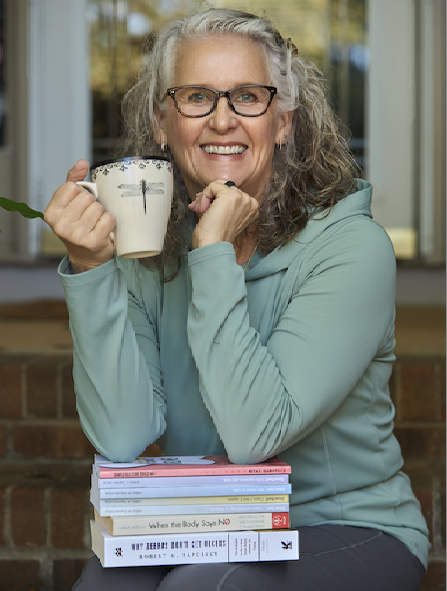
Rita K. Garnto is a Simple Self-Care Mentor, Stress Disruptor, and international author who brings nearly 40 years of healthcare experience - including high-stakes service on the MedCenter Air trauma flight team - to her work. After navigating her own intense personal and health challenges, she developed her "philosophy of one," which teaches that profound transformation begins with making just one simple, effortless change at a time. Today, Rita empowers executives and organizations to combat burnout and boost productivity through her science-backed workshops and best-selling book, “Simple Self-Care Saved Me!” By sharing practical tools to shift the nervous system out of "fight or flight," she helps high-achievers prioritize their well-being, disrupt stress, and reclaim their resilience. Learn more about her here: https://simpleselfcare.net/