
Real Working Caregiver Stories
Actual working caregivers share their stories.
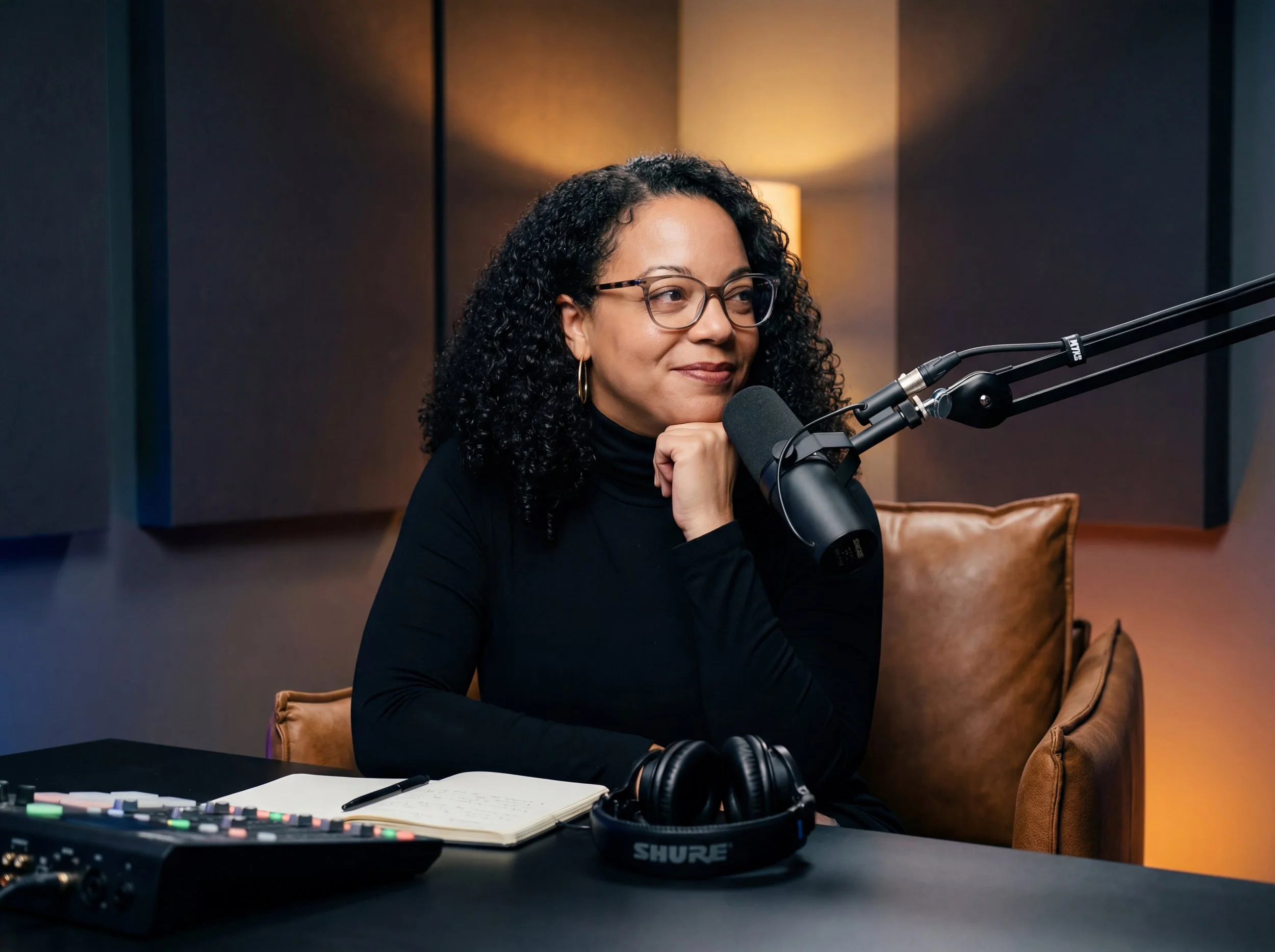
Stories From Real Working Caregivers: Jackee de Lagarde
Zack: Hello, everybody! Welcome to another episode of Stories from Real Working Caregivers. We got a fantastic guest today, Jackee de Lagarde. Thank you, Jackee, for being here with us!
Jackee: Of course, thank you for having me!
Selma: Welcome, Jackee.
Zack: We're so excited for Jackee to share her caregiver journey, but also to share about a new podcast that she is the host and producer of, and we can't wait to hear more about that. It's going to be a valuable resource for working caregivers. We're going to get started. I'll start with the first one, Selma, if you don't mind, and that's a very easy one, because I heard your story already on your podcast. Briefly, tell us about your caregiver journey.
Jackee: My first foray into parental caregiving was in a supporting caregiver role with my dad, who passed in 2012. I was working in San Francisco, building my career at Levi Strauss & Company. And during that time, I had to move back to New York around 2010 to help my mom care for my dad, who was battling myelofibrosis, which is a rare blood cancer where the scar tissue builds up in the bone marrow and disrupts blood cell production. So, because of that, he dealt with a lot of fatigue, anemia, he had an enlarged spleen. A lot of people aren't familiar with that disease, and it's really closely related to, you know, some of the bone marrow disorders out there.
While that role was challenging, it was in no way at the level of engagement and sacrifice that I'm dealing with right now. My mom, Violet, has lived with my husband and me since 2013. When my son was born, we were your quintessential, multi-generational family. From 2013, fast forward to May of 2019, my mom fell. A few weeks later, we were sitting at dinner, and she was saying, you know, I kind of feel wonky. She used that term a lot when she wasn't feeling great. She looked tired, and I could tell something was off. So, the next day, we decided to take her to the ER to see what was going on, and it turned out she had a mini stroke. The doctor said it was mild, and she'd have a full recovery, and everything should be fine once she's out of the hospital.
Fast forward to 2020 in the fall. Things really started to change. She was falling a lot more, and she had a really bad fall in the parking lot of a CVS during COVID. We started looking for neurologists to give us an explanation of why this was happening, because her primary care physician couldn't give us an answer. We saw multiple doctors, and we finally found Dr. Elias at the Neuroscience Center of Northern New Jersey. He had diagnosed her in November of 2021 with PSP, which is Progressive Supranuclear Palsy. That is a very rare, progressive neurodegenerative disease that affects walking, balance, eye movement, muscles, your bladder, and cognition. And it's all due to a buildup of a protein in the brain called tau.
The challenging part of this is it's really a disease that's often misdiagnosed as Parkinson's. But it progresses a lot faster, and causes early fall, stiff movement, swallowing difficulties, and there's no known cure or proven medication that you can take to help with it. The latest person I heard who had this disease was Jesse Jackson, who recently passed away…. We want to make sure that people are aware and know that this disease is around.
From there, she started using a cane. She moved to a walker. And she became wheelchair-bound, and she's lost the use of her legs. Both arms are frozen at a 90-degree angle. Recently, she's been dealing with dysphagia, which is a swallowing issue, and now she's doing something called palilalia, which is repeating words often. She can only say about 5 or 6 words right now, so those just continue to be repeated over and over again.
That's where I am in this journey. We've had to make changes to care teams. We've switched her primary care team. We have an amazing crew from Vanguard Medical Group in Verona, New Jersey, who does house calls. We also recently put her in in-home hospice, which has been the best decision we ever made. It's been a huge help. We work with an incredible organization named Compassus. They’ve really made this journey much, much more manageable. Really thankful for both of those teams, because it is a lot to learn about this disease, nevertheless, take care of someone with it. They really took the time to learn about the symptoms and the progression and how that's all working.
Zack: Wow! Thank you so much for sharing a story about Violet, and shout-outs to Vanguard. I'm very familiar with them. As I mentioned to you before the show, I ran a home care agency in your area, and Vanguard and I worked very close together. An amazing provider that comes to homes. And then shout out to Compassus Hospice. I have to give shout-outs to both of them. Just one other quick follow-up question. When you mentioned PSP, and I thought I knew it all, I've never even heard of that. I looked it up, and only about 20,000 Americans have it. When you learned about that, where do you go to try to get support and learn more about it?
Jackee: It was tough, Zack. I have to tell you, I looked at every Google search, Mayo Clinic, everything I could Google and find more information about. I looked at YouTube videos. I searched different symptoms. And then, I did come across a couple of groups on Facebook that specifically deal with PSP and caregivers of loved ones that have PSP. Those groups have been extremely helpful in just making sure that you're understanding the same things that other people are. You're getting a sense of where you are in the stages of PSP, which is really challenging, because everybody's different. They give you this timeframe of anywhere from 5 to 10 years, and the symptoms vary within those 5 to 10 years. There are some people who lose the ability to walk early on, and there are people who don't lose that until the very end, or people have problems swallowing at the very beginning or at the very end. The eye movement is a really significant test of where you are and whether you have this disease. My mom didn't start showing that symptom up until probably a year ago. It is a very, very challenging disease. It is rough on a caregiver. I just wish that more people knew about it and understood it, especially in the medical field, because what I found was there were neurologists that we went to who had no idea what I was talking about. And that is really frustrating.
Selma: Jackee, going back to when you were taking care of your dad. And now, while you're taking care of your mom. Were you, and are you working at the same time? And if so, how is that impacting your work?
Jackee: Yes, I was working… when my dad was sick. I was again working in San Francisco, moved back to New York, and was working for Kenneth Cole. With my mom, I was working at Kate Spade, continuing to build my career, when things really started to progress. What's really challenging is before she got sick, my mom was very hands-on with my son and would take him to school activities, and take him to school. So, when that was no longer a safe option, my husband and I realized we had to make a change, and we decided that I would continue to work, and he would be a stay-at-home dad as well as a caregiver to her during the day while I was at work. So, we did that for a while, and until we just couldn't. He couldn't take care of some of those daily functions, like showering and taking her to the bathroom. She needed someone who could really assist her with that. So, then we had to bring in some caregivers. But I was working the entire time, and what was really great was that I had two bosses who were very sympathetic to what I was going through. So, I was able to have a lot of flexibility in order to take care of [her].
Selma: That's great. So, you did share with your managers that you were a caregiver. Did you share with any other colleagues, and maybe find some support there as well?
Jackee: I did share my caregiving challenges with certain coworkers because I thought it was important for them to have an awareness of certain limitations and the need for flexibility. Whether that's because one of my caregivers called in sick, or they're on vacation, or a doctor's appointment has come up. As I mentioned, both of my bosses, both at Kenneth Cole and at Kate Spade, were very sympathetic and allowed me that time and that flexibility to tend to my parents. Now, on the flip side of that, I look back, and I think that maybe that knowledge prohibited me from certain opportunities based on assumptions around my availability. Whether that's to take on new responsibilities or to go on a business trip. So, in hindsight, I've been thinking about this a lot recently. Maybe I could have been less transparent with everything happening at home. But at this point, who knows if it would have made a difference or not, but I do feel like there were some opportunities I definitely was looked over because of the responsibilities I had at home, and just assumptions like maybe she doesn't need to go on this trip, or, maybe that's a little too much to give her as far as responsibility. She's dealing with enough at home. Ask me. Don't make that assumption. Ask me and let me say no or give you another option.
Selma: I think you're making a great point there, because a lot of times, employers think they're actually helping to support our care journey by not giving us certain assignments that they themselves think would be too overwhelming for us while we're caregiving... But they're trying to be empathetic, they're trying to be supportive, and sometimes they get kind of shuffled in the mix.
Jackee: You know, I'll add to that. Going to work was my respite. I love when people were working from home, yes, it was great. But when we got back in the office 3 days a week, I loved it. I loved going to work. Now, commuting on New Jersey Transit is one thing, but once I was there it was really that respite. I had a chance to just disconnect from that world… it felt good…
Zack: Wow. I don't know about you, Selma, but my HR hairs were going up on my arm when you, [Jackee], were telling that story about how they might have been making decisions for you, rather than asking you. I got to tell you something. If anybody in HR is viewing this and watching this, please, please, please, please listen to what Jackee just said. It's more important that we let the employees drive that conversation and let them make those decisions, not us. Thank you for saying that. That was awesome. Selma and I have talked to quite a few caregivers, and what we have found is that regardless of whether you already had caregiving spirit and skills in you already… that caregiving changes you. It impacts your life; it impacts your work. How would you say it has impacted your life and impacted your work?
Jackee: Well, I've definitely learned a lot about patience. And advocacy. And understanding. Being tasked with so much responsibility has allowed me to figure out the right balance of emotion and tactics. It's also taught me that I can't do everything myself. I need to ask for help and to delegate. Delegation has been a competency that I've worked on as a skill set in my career, and I feel like this is the ultimate test of delegation. I've also become way more comfortable with ambiguity, especially with this disease, as I mentioned earlier, it is the ultimate example of gray area. You have no idea which stage you're at and how long your loved one will endure this disease. Not knowing how my mom feels and what she's thinking has really been the hardest part for us right now.
The other change for me was when I got caught up in a round of layoffs at my last company in May of 2025. It was devastating. I was there for 11 years. I really built a community there and built half of my career there. But I realized shortly afterwards that this break in my career gave me more time to spend with my mom as her condition was worsening. It was a blessing in disguise for me, this layoff. I'm sure I'll look back on it and feel lucky that I had this time with her. And that would override the challenge of not having a job and job hunting, which is just nuts in itself. Like, a whole other thing I got to deal with now.
Zack: Speaking of job hunting, and speaking of being laid off, or speaking of resigning because of caregiving, there are gaps in working caregivers' lives, whether it's on LinkedIn or on their resumes, and you touched on it. You also touched on the skills that you've picked up, which people think are so ambiguous themselves, right? Advocacy, understanding, delegation, patience, but you've given clear-cut examples. What advice would you give somebody who's listening to this right now, who has a gap on their LinkedIn profile or resume? What advice would you give them… what should they share? Perhaps, if they should share?
Jackee: What I've learned in the last 10 months in this gap in my career is that even if you're job hunting, find a passion, find something that gives you purpose. Whether that's a hobby, whether it’s doing temp work, or volunteer work, put that on your resume. Put that on LinkedIn. I'm on the board for FIT, on the Foundation Board, and I've made a huge commitment to them over these last 10, 11 months, and have really dialed in and supported that organization, and given it my all. From there, I've picked up a whole new set of skills. I'm able to network. It's about turning these moments into wins.
I'm working on a book. I've started this podcast. And oh, by the way, I'm still looking for a job, so there's this idea of poly-working that I think is something a lot of professionals are moving towards. Because number one, who can rely on corporate America these days to bring you through to your retirement without having to supplement income? Because you're part of the sandwich generation, and you've got a child at home, and you've got a parent at home, you've got to take care of. There's also this need for people to dial in and tap into their passions.
Caregiving was something that was a huge passion for me, and I was looking for community in a very different way than a lot of other podcasts were showing up for caregivers. Instead of just sitting around and doing nothing about it, I started this podcast. Just be open and honest. I think when I left my job, I was given outplacement services, and the first thing they said was don't put open to network on your LinkedIn. Don't tell anybody except recruiters that you're looking for a job. Don't change the date of when you got laid off. Just leave it blank. I remember talking to some professionals a couple weeks ago who are part of this women's professional group. One of the board members said just don't listen to that. Just go for it. You've got to tell people what you're doing. Closed mouths don't get fed. So, put it out there.
I think, Zack, I'm going to say this, it may be controversial, but part of the challenge is that a lot of recruiters and hiring managers, either don't understand there's a historical stigma around these breaks in careers and no one's training them to recognize, wow, okay, someone got laid off in 2025, and they're still looking for a job in 2026. Well, let's focus on what they've been working on and their whole career. Just because I'm out of work now doesn't mean that everything else is negated. I spent 20-plus years building my career. I don't think 11 months is going to completely wipe that out.
Zack: Thank you. Thank you. I want controversy. Selma and I welcome it. My daughter started as a recruiter, and she's now in an HR role, and she will agree with you 150%. We also had Joseph Fuller [as a guest]. Shout out to Joseph Fuller from Harvard Business School. He shared with us that the AI tools today will rule you out if you put gaps. So don't do that… Thank you. Great, great share!
Selma: You mentioned your podcast, your launch of your first episode, which I listened to thoroughly, and I'm chomping at the bit for episode 2. It was just amazing. If that's the caliber that we can expect, going forward, you're going to have some loyal fans very quickly, because it's really well done, very insightful. Your first guest, just a great storyteller, Lori Stokes, very heartfelt… but my question for you is, how did this podcast idea come about for you, and what is your vision?
Jackee: Sure, I'd love to. It's called Who Cares About Me? and it was born out of this need to find and build community for parental caregivers and, people also taking care of their grandparents. And you've got millions of adults, many of them in the corporate world, balancing careers and families and the responsibility of caring for aging parents. You also have to navigate all these complex decisions, and you've got no guidance and no support sometimes. As I mentioned, laid off in 2025, trying to figure out my next adventure. And this idea came to me literally January 1st of 2026….
My goal with this podcast is to elevate that conversation around caregiving and provide insights to help families, professionals, and organizations supporting caregivers in this stage of their lives. I truly believe caregiving is not just a personal issue. It's a workforce issue. It's a healthcare issue. It's a societal one, and people need to be more aware of and sympathetic to it. We need companies to give as much weight and attention to elder care as they do to childcare. The sandwich generation, we make up 25% of the U.S. population, and it's growing every day, and those caregivers are getting younger and younger. When you think about the financial toll that this is taking on caregivers -- You're spending 20% of your income on childcare. And now you've got to tack on probably the same, if not more, of a percentage to taking care of your parents. The numbers are staggering. You've got the financial toll. You've got isolation. You've got exhaustion mentally and physically, and that can have a serious effect on you and your family. Then you're working 40 hours a week. You're tacking on how many other hours you have taking care of your loved one. It's a lot, and I just want my listeners to know that they're not alone in this journey. It's okay to talk about it, and you never know who you're going to meet in the same situation that you can lean on and connect with. I've spoken with dozens of people over the last 12 weeks. Some of them I've known for years and just finding out today that they're in the same situation. It's mind-blowing to me.
Selma: What is it that you want people to walk away with from your podcast? One of the points that I walked away with was the fact that you chose Lori Stokes as your first guest. It really spoke volumes about, we're not in this alone… You chose a very public figure with... a long history of being in the limelight... it really drove home to me that I'm in good company.
Jackee: I had been following her for many years on social media. She had posted many years ago, when she was taking care of her mom a picture of her and her mom. It was just a picture of the back of them. And for some reason, Selma, that picture stayed in my head up until I started this podcast. And that was the first person I thought of for this podcast…
Selma: What is it that you want your podcast audience to walk away with? What is the main thing?
Jackee: I want them to know that they're not alone. And I want them to know that this is an opportunity for them to listen to stories. The way that I operate, I'm a listener. I act this way in a corporate setting, in my personal life. I'm a listener. I cannot stand when people interrupt me. And so, what I brought to this podcast and my style of interviewing is to just let people talk. Because I think that when you're a caregiver, you find that you get in front of people, and you start sharing your story, and then you start getting unsolicited information… a lot of times, caregivers just want to be heard. I've made a conscious effort to build this community and show that there is an opportunity to just listen to people. If we need help, we'll ask. Just listen. Take it in. Empathize, validate, and connect. That's all I want from this podcast, is to show that this is a way to talk to caregivers and to listen to them, just to let them speak.
Selma: Well, one last question, and you asked this of Lori at the end of the podcast… how are you taking care of you?
Jackee: It's been a journey. And I'm getting better and better at that. I will say my biggest support system is my husband, Clarence. He has been the best partner in this journey. I could not have done this without him, both caregiving and this podcast. He had already been a caregiver to his late mother, and was really helpful with my dad, and has gone above and beyond his son-in-law role for my mom. I will be forever grateful to him. One of the things I'm also grateful for is his ability to tell me to chill. Take a beat, go for a walk, or grab a massage. Do you want to talk about it? Just being there as a support system, not talking at me. Really being my partner in crime when it comes to this caregiving… He's seen parts of my mom he probably should have never seen before as a son-in-law, but that's what happens when you step in and help a loved one. You look past all of that.
I have the support of my two brothers, who each contribute to this journey in different ways as well, and together, the four of us do the best we can with what we're given. I think for me, just taking that “me” time. I really love spending time with my son, Jack, who's 12. He makes me laugh, and he's extremely empathetic and caring, and those moments where we can just be a family together just mean the world to me.
Selma: Thank you.
Zack: I wholeheartedly echo Selma's comments. You know, your show is spectacular. And the fact that you're allowing your guests to speak is evident. Sometimes you get tired of listening to podcasts where the host is talking more than they should be. I think you were… I didn't do the exact math, but you were about 5%, and your guest was 95%, and that was fantastic. I also just love, in your trailer, you said you really want to make sure that this is an experience where your guests are sharing real experiences, where there's a lot of reflection going on, and connection. I love that, and I certainly felt all three of those listening to your first show. Can't wait for so many more.
Going to ask you our favorite question… We're going to ask you, if you were to go back before your caregiver journey started, I know you said your mother fell, and then your father had an illness, but before all that, what would you tell Jackee at that point in time before you even stepped on that beginning of that journey? What kind of advice would you give Jackee then that you know now?
Jackee: Oh… My gosh. Just live life to the fullest. Because… I've been in pause mode for so many years. For 5 years, I've been in this role where I don't have the luxury of getting up and going. Everything has to be planned to a T. That's everything from vacations, dinners, date nights, taking my son out for lunch, doing fun activities with him… You realize how much you miss that freedom. When I look back, I wish I had done a lot more. Traveled a lot more. Took advantage of different activities and experiences more.
I also wouldn't give up what we've already put together for her and the setup that we have for her. I will say one of the things that I wish I had done earlier in my career, in my caregiving journey, was getting the respite care. And learning how to delegate, because I was not listening to my body, and I tried to do and be this superhuman in the beginning, and doing tasks I had no business doing. And my body, unfortunately, has suffered because of that. I have terrible back issues that I've been trying to slowly fix and slow the progression of. But it's probably too late at this point.
There are other things that I ignore: the exhaustion, the fatigue, the stress. I wish I'd gotten in front of that earlier. So, you know, anyone that's listening who’s in this, the very beginnings of it, get the resources early. Figure out what you can and can't do. Don't try and be Wonder Woman, Superman… pay attention to your body, listen. It's telling you no.
Selma: Zack and I have this saying, we always say It's okay to let go of the guilt and give yourself grace… One last question for you, and that is, how can people get in touch with you and learn more about what you’re doing?
Jackee: You can find me personally on LinkedIn, Instagram, and Facebook @jackeemd. And then the podcast, Who Cares About Me? podcast, is on all those same social media channels and major podcast platforms like Spotify, Apple Podcasts, Amazon Music, as well as YouTube. And we also have a website, whocaresAboutMePodcast.com. As you all mentioned, our first episode dropped on March 31st. It's called “When Caregiving Finds You” with Lori Stokes. And we launch every other week, so our next episode is dropping on April 14th. And it's called “Setting Boundaries Without Guilt.” We're interviewing an amazing woman, Lynette Sheard, who works in the mental health space and is taking care of her aunt, which is a little bit of a shift from our concept, but still in this kind of elder care world, and her story is pretty incredible as well.
Selma: Thank you. Thank you so much.
Zack: Congratulations again, Jackee, and we wish you the best of success. You're going to be a big success. I mean, it's much needed. And, who… who would have thought you'd been podcasting just a few years ago, right? Or even when you got laid off, who would have thought you'd be here doing a… getting your voice out there to the world?
Jackee: Zack, Selma, not me. I was the last person who wanted to be in front of any audience, any camera. I couldn't stand my voice, but everybody keeps telling me, I love your voice, it's so soothing. I don’t know. You see yourself, and you see something different than everybody else sees. So, I just put all that aside and just went for it, and it's been an incredible journey, and the opportunity to meet people like you two, and some of the other guests that are coming up. I think the listeners are going to be really inspired and continue to feel that community as we go through this entire season.
Zack: Can't wait. Thank you, Jackee.
Jackee: Thank you.
Selma: Thank you so much. It's great to meet you and hear all about your story. Thank you.
Zack: Honor and a pleasure. Thank you.
Jackee de Lagarde is the host and creator of the podcast, Who Cares About Me?, a podcast series spotlighting the lived experiences of parental caregivers, those navigating the emotional, practical, and often invisible work of caring for aging parents and grandparents. Jackee is a wife, mother, executive in the fashion industry, and primary caregiver to her 82-year-old mother, who is living with Progressive Supranuclear Palsy (PSP), a rare degenerative neurological disease. Like many caregivers, she didn’t plan for this role, it found her. Outside of the podcast, Jackee is a global licensing and branding executive with more than 20 years of experience building and scaling licensing businesses for leading fashion and lifestyle brands such as Kate Spade New York, French Connection, Dockers, Kenneth Cole, and Jack Spade. Today, she advises companies on licensing, partnerships, strategy, and brand development through her consulting work. She was named one of the “Top 100 Notable Black Leaders” by Crain's New York Business and serves on the Board of the Fashion Institute of Technology Foundation. Learn more about Jackee here: www.whocaresaboutmepodcast.com