
Real Working Caregiver Stories
Actual working caregivers share their stories.
Stories From Real Working Caregivers: Joanna Glum 3/30/26
Selma: Welcome, everyone, to our Real Stories from Working Caregivers series. We are so excited to have our guest today, Joanna Glum. Hi, Joanna!
Joanna: Hi, thank you so much for having me. Genuinely, this is one of the only podcasts that I listen to, so I am fangirling right now, thank you.
Selma: And how are you, Zack? How you doing?
Zack: I'm… I'm doing great! You know, Joanna's going to be amazing here, so we should get right into it. Let's do it!
Selma: So we'll start off, Joanna, by having you share your caregiver journey with us.
Joanna: Whew! That is a deceptively difficult question in many ways. I don't know if it feels familiar to other caregivers, but suddenly one day you wake up and realize you spent the day emptying bedside commodes and walking… watching black and white films, so I would say that my care journey was very much a suddenly, then all at once, and I'm so grateful for that. I want to very much stress that my care story is one of gratitude, in spite of the fact that it has been difficult. I consider myself the luckiest kid in the world that I was able to spend as much time as [did] with the grandparents who raised me. So that's how my care journey began.
My paternal grandparents, my dad's parents, raised both my sister and myself. Even when my parents were together, they were the ones who got us to school, they insured our tuition, they put food on the table for us. And for all intents and purposes, they're the reason why I have memories of a really cherished, very well-loved childhood. My parents are both very gentle people in their own right, but they did have a tumultuous relationship marked by respective issues around substance use disorder and behavioral health issues, and they've both sought treatment for it. But they were not able to be present for us as parents, so my dad's parents stepped in…
I'm very grateful to say that my grandfather passed in 2020, my grandmother only this last year in 2025, at the age of 99. A very strong, tough Greek woman who would have lasted a lot longer had there not been a couple of incidents at two hospitals. I'm more than happy to chat about that, but I've really spent my 20s in a state of part-time and then full-time caregiving…
In 2017, my grandfather became severely ill. He was hospital bed bound for the last three years of his life. I split care full-time with my father before he retired. The year my dad retired, I did my master's in one year. That was something that I wanted to do. I intentionally chose a one-year program, knowing that I would want to come back and support that care journey.
And then, the pandemic happened, and my father was of the mindset that it was just like the flu, so I moved back in. I was teaching in the Bay Area. I moved back into the family home to take care of my grandmother… and I think one of the things that was unique to my experience is that my grandmother truly relied on me for every type of support not just with her ADLs. But I was the person who stayed up with her until 4:00 am when she would have panic attacks. I was the one who read to her the Alif Shafak book that came out the summer of 2020 in the middle of the pandemic. I was the one who would go over obituaries with her when she was trying to Google her former friends and she, by her own account, told me more than she told any other person. So I felt that responsibility deeply in ways that were difficult when I was very young, when I was 21.
I think being so young, when I started my care work and having had a peer group of young professionals who I like to say, that while my peers graduated from dorm rooms to boardrooms, I went to a childhood bedroom, and that was very difficult to translate early on. I had one of my dear friends, whom I love very, very much, nonetheless, when I was 21 and came back to take care of my grandparents, some health crisis had happened, she said, I think you have a savior complex. And other people, very well-meaning, have said, or used to say, you know, I think this is codependency.
And so, teasing apart that language from, this is not codependency, this is interdependency. This is what the nature of care looks like, especially in our country, where you're right, it isn't fair that somebody should be compelled to give up a career, or make sacrifices to a career in order to give their loved one the care that they deserve. It nonetheless is our reality.
And so now, with my grandparents past, and having been their primary caregiver, I have been care coordinator for my parents, regardless. My mother suffered a period of housing instability. She's dual eligible in California, meaning that she receives both Medi-Cal and Medicare benefits, and when those have lapsed, I have stepped in to be the care coordinator. I've been on phones with social workers. I secured her housing. And similarly, I am here to secure care for my father who is in a state of need as well. But I do not anticipate supporting with ADLs or the day-to-day care as I did with my grandparents, and he knows that because I'm really restarting my career at 32. That's a conversation we've had as a family, but that's… that's a long and short way to put the journey, which, as you know, there's so much texture in there.
I could tell you my care journey as it relates to videos I have of my grandmother dancing to Frank Sinatra with the autumn leaves turning behind her and her O2 canister on. That was the last autumn we spent together before she passed, but it was always very important for me, and I think, if I may offer, one of the ongoing conversations and pieces of work that I've done with myself is to really be intentional, and to wake up every day, so that way, when you do have hard days as a caregiver, remind myself that this was the difficulty that I chose, and therefore there must be something else that I have chosen. And that reframes the conversation, at least it does for me, to say, you're right, I did choose this. It is very difficult. There are a million other things I would love to be doing. I'd love to be in Key West with my friends right now. I'd love to be on a film set working. But I am here with my grandmother because it is valuable for me personally to give her love, and to receive the love from this person who is not going to be around forever, and having that dialogue, and being in a space where I really do consider it a privilege to have been able to pause my career, to stutter my career in order to spend time on the couch with my grandmother. I'm really very lucky, so that's the long and short of it.
Selma: That's just amazing. What a beautiful story, my goodness! But one of the things that differentiates you from typically the guests that we talk to is that you've cared over two generations. You cared for grandparents, now you're caring for parents. And at some point, possibly, you'll be caring for your own children… What do you think sticks out as some of the biggest challenges that you had in terms of caring for this more senior generation of your grandparents and then your parents? And then also, what do you see as the best part of your journey because of that experience of over two generations?
Joanna: Thank you for that question. I'm really grateful for that question. I would say the difficulties… manifest more social-emotionally, and then more practically. On the practical side, my grandmother died because of mistakes made in a hospital, and there were mistakes that were born of a failure to appreciate a geriatric patient. So, in April 2024, I was away. When I was away… she was in a state of panic until I returned. I still get asked to this day by medical professionals if I'm in the field, because I'm just very good at parroting their own jargon back at them. I give my grandmother's birth date more than I give my own still, because her medical records were so fluently memorized.
But April 2024, I was away. My grandmother had a pain in her chest that usually related to constipation or anxiety, and nonetheless, she wanted to go to the ER. In the ER, they said, okay, well, the standard is a CT with contrast. I would respond to that, that you would not give a 98-year-old a CT with contrast who has a history of chronic kidney failure since 2006. And my grandmother knew that, and my sister knew that. And they both said, no contrast, no dye, she's allergic, it's in her chart, she's allergic. My grandmother refused it multiple times. When they wheeled her into the radiology suite, my sister [who] couldn't follow my grandmother, once again, for the fifth time said, no dyes, right? And whoever it was responded to her, well, the dyes are different now. And it sent her into an acute kidney injury. They thought she was going to die. Then I took a red-eye home. And I sat with her by her bedside while she had delusions, while her body was following her, and she hallucinated snakes and her mother. And I talked to her day and night. I had to fight to spend the night with her in the hospital. Fortunately, because of California advocacy, that is no longer the case. You are allowed now to have an advocate, a caregiver with you by your bedside through the night…
And so, the last 12 months of her life were marked by other hospitalizations as a result of that AKI. And in those times… I spent two weeks of nights with her in the hospital, August 2024. They were going to give her an antibiotic. I said, well, hey, she's allergic to that. While they were transferring her from the ER to another floor of the hospital they checked. It took about two seconds for them to say, Oh, she's very allergic to that… I would say it's been incredibly difficult in that respect, to basically learn the language of advocacy… I have a background in theater, and I think that in those settings, the hospital is a suite of performance. So I perform competence, and I perform just enough patience, because I think I've had a learning experience, so not to make them feel threatened, but also to be assertive.
And within that, I would say that my family is part of the so-called overlooked middle. We don't have enough money to afford any pay privately, and I mean any, but we also don't qualify for any supports, and that is why I'm a caregiver, because there was no other option. Had my grandparents sold their home in 2011, as my uncle had suggested, they would have been able to afford assisted and or private living for about 4 years, and then what? One passed in 2020, the other in 2025, so you're looking at 10 years of life with no assets, with nothing. And I remember being at the kitchen table in 2011 and saying, absolutely not. So having to make those fights, and having, again, to explain to my peer group hey, I know that this is tough on me. I respect that you care about me, and you don't want me to make this choice, because it means a sacrifice on my end. But staring down the barrel of my ethos, which is to say they deserve the care that they have asked for, which is to age at home. And my own desires, I am choosing my ethos, knowing that at one point, I will be able to choose my own desires.
… Also you asked about the joys, and I wish we had five hours. I wish we had five years, because I, and you'll forgive me if I get a little teary, but my grandmother was a tough woman. She did absolutely condition the family to… come back home and to take care of her in ways that maybe created unfair expectations. And yet, I was able to learn who she was as a person before I ever hit the scene. Something that I would say is that I knew her for only 30 years of her life. She was so much of a person before I ever met her… taking care of her, she used to call me her little buddy… I have hours of recordings of her stories, of her parents coming over from Constantinople… escaping the genocide, hitting the town in Chicago.
I got to hear about how her mother worked three jobs during the Depression just to afford presents for my grandmother, whose birthday was Christmas Eve. I got to learn who she was and also who she might have been had her circumstances been different … she would have been a CEO. She would have been a lawyer. She would have been anything else had she not been born in 1925 to a community of Greek immigrants who had a certain set of standards for young women. But nonetheless, she was an occupational therapist. She was brilliant. She was so smart. And cared so deeply.
I got to meet that woman, and I got to know that woman, and I got to watch operas with her. I joke, sort of, is it my own interest, or is it just because somebody else put it on me? And I say, what does it matter? When I hear an opera, I hear my grandmother now, and I was able to take part in something that mattered to her. And seeing her receive that and be seen in that way, because she's a woman who would describe feeling a little invisible to basically everyone in her life except her best friends, who no longer were on this earth. And I got to be that person, and that is something that I will cherish forever.
Zack: Thank you so much for sharing that, Joanna. As you know, we're both Greek, so in our culture, we say, may your grandmother’s and grandfather's memory be eternal. May their legacies continue to live on, which you're doing a great job of that. Your yaya (grandmother) sounded amazing. That visual of her dancing to Frank Sinatra with the oxygen mask is just priceless. It's funny, my wife says that about my mother all the time. If she would have been born in a different generation, she'd be running a company, because, you know, they're so sharp, they're survivors, right? But that said, they're also very proud….
I appreciate the question that Selma asked you, because with challenges, there is joy, and you did seem to rest your shoulders just a little bit when you were talking about the joyful part. But being a caregiver is extremely difficult. Two quick questions. One… how did you go about, at a young age, inexperienced caregiver, go about getting resources if it wasn't cool to talk about our personal lives outside of the house?
Joanna: Zack, thank you for that question. It is very culturally sensitive, so to speak. I wrote an essay about my grandmother that was published with Roxanne Gay's subprint, “The Audacity” in 2023. It was from the perspective of what I would like to say to her, but would not. One of the lines that I wrote in there is “You don't even know that I'm here, you would hate it if you knew that you were here.” And to this day, even talking about her in this way, I feel this lingering sense of, I shouldn't be doing this, because she was proud. She didn't share her problems with anybody, and I'm struck by how many of your former guests have mentioned this. I'm recalling specifically Ebony, who mentioned the role reversal being very hard, of when a child takes care of a parent. In this case a grandchild for their grandparent, but it was more like a parental relationship.
That was very difficult for my grandmother, and I think about midway through my care journey, I realized the importance of challenging her up to a point to maintain some level of autonomy and independence. That way, she wouldn't refer to herself as a burden, because she often did. I needed to continually reinforce that she was not a burden. That she was a choice, but that also meant I did have to hide when I was having a bad day from her, and I hid it from my friends and the people that I cared about, especially when I was young, especially when I was between 21 and 25. I was working as an assistant for a director in LA. He didn't know I was up here in Sacramento. I didn't know how to talk about it. I didn't know how to justify the choice that I had made when everybody was either providing this kind of psychobabble speech around savior complexes and codependence, and… others were just thinking that, oh, I'd moved home because I couldn't cut it.
That was very hard, and I'm also a very proud person, and I didn't like that. I also think that I failed to give credit to my community, which is so strong and so loving. I come from a community of friends who are also raised in immigrant situations, and they very much understand what I'm doing… what I wanted to do was talk about what I loved about my grandmother, not just, oh, I've had a bad day caregiving. And that felt important for me. Not to preserve my grandmother's sense of pride, but to honor my own reality of why it was I was doing what I was doing.
Zack: That was a great tip on how to manage that dynamic. Hopefully, as listeners and viewers and readers are looking at this, at your story, maybe they will be more open to talk to that director, or to that manager, or to the colleague, so that things can get a little bit easier on you. One other quick question. You said you restarted your career at 32. How has caregiving influenced what you're doing now?
Joanna: A great question. In every way. In every way, shape, and form. So, I have a background in film and theater. My master's is in playwriting. My first job out of college, I worked for a company that cut trailers. I've worked on projects like Lady Bird and Bumblebee as an office production assistant. For anyone who's familiar with those worlds, so much of that work is networking. It's being around. It is what a former mentor once called the “remember I'm alive tour.” I was able to, through the loving respite care that my sister would provide and my father would provide when the health crises weren't so in crisis, I was able to go out and do writers' residencies. I was able to work on a weekend short film. I was able to make my own short film in the summer of 2020, but I shot it here at the house where I was caregiving for my grandmother. So, I was able to have those opportunities.
However, my industry has a very short attention span. A lot of industries perhaps do. It demanded that I be very flexible and very creative with what put money into my pocket, which was not necessarily what I would have done to build my career, per se. I've done freelance curriculum building. I've taught… I've been teaching since I was 12… that's primarily where my income has come from.
That's been consistent, but it's not a clear-cut path. I wouldn't call that my career. My career is as a writer, as a director. What caregiving has done is most of my projects have a care story now, which I'm very grateful for. Also, I've become so much more involved in care advocacy. Advocacy for older adults and people with disabilities, and I am so fortunate to be in a community of folks who have done this for decades, who know so much more than I do. I'm grateful to learn policy talk as well as learn how I can use my capabilities as a storyteller, both professionally and personally, to elevate and uplift other caregivers, other older adults.
Moving forward, yes, I'm sort of restarting my career at 31, 32. What does that look like to me? What that looks like is a career on my own terms. I'm still very ambitious, but I have seen what the purpose of life is, and it has nothing to do with a film set. If I'm going to go back on a film set, I need it to be purposeful. That might mean that I'm not paid as much as some others. That might not mean that I am in theaters in a way that might feel attractive, or once did feel attractive.
But what it has influenced is a desire to marry these two passions of mine, which, you know, I used to joke, everything I write is about my grandmother. Yes, and it really is. I have a number of projects coming up that aren't specifically about care, but she's in there. Caregivers are in there, because if you have a platform, as you both know, when you have a platform I believe, personally, I'm Greek, right? We tell our stories in order to cure the polis. We are here as storytellers to save the city, and that's how I approach art.
Zack: Your yaya is beaming down on her little buddy right now.
Joanna: Oh, Zach, she would have loved you. She would have loved the both of you. Oh my goodness.
Selma: Well, speaking of your career path, your LinkedIn profile contains some teasers of some of your short documentaries, which are just so intriguing and so amazing that I can't wait to see the full-blown documentary. First question: how can the audience view the full documentaries? Because they will want to, once they look at the teasers. And the second question: what is the message, or the key messages that you would like them to walk away with? One of the teasers that I found, you're filming the feet of a caregiver throughout their day… and it’s so intriguing.
Joanna: You're so kind, Selma. I'm so grateful to you for asking that. Thank you. Well, first of all, because of music licensing, it's not available just to click, but I will give you the password. Anybody can watch it on my Vimeo. I will send it to you. The film is called You Should Get Out More, and I'm a firm believer that limitations are opportunities. So, right before March 2020, I was in pre-production for a very different short film that was a proof of concept for an old screenplay about virtual reality in a nursing home. But then the pandemic happened, and I still had all of this creative energy, and I thought, okay, well, what can I do?
A short film that follows a pair of feet throughout their day of caregiving was initially born of necessity. We were covered in head-to-toe with PPE because I was shooting in the house in which I cared for my grandmother. It was a team of two, and once I thought, okay, what can I do and how can I do it? What I wanted to attempt to recreate is it is essentially a silent film. There's no dialogue until the very end. And each frame is repeated. In other words, the foot is always in the same spot on the frame, moving throughout its day, so what you essentially see is the landscape of what care looks like… and I'm struck by how caregiving can feel claustrophobic. How it can feel repetitive and redundant, and how sometimes you don't even recognize yourself within it, because you lose yourself in the roles that you play. You lose yourself in caregiver, care recipient.
At the end of the film, the only dialogue that we get is the grandmother asking her granddaughter for a foot rub, the irony being that these little feet have done so much work. And then finally, the frame breaks. We crane out, and we see grandmother, we see granddaughter, we see the foot massage, and them watching some old film in the background. … what I hope that the film suggests, is that what breaks you out of that sometimes really ingratiating claustrophobia of care, when you feel like you're the only person doing this in every other anonymous living room, what breaks you out of it is remembering the person that you're there to care for…
I was really fortunate to be able to screen that at a film festival in Vermont, for example, Middlebury New Filmmakers Festival, and I had a number of people in the audience who said, hey, I've done that, I've done that! Yes. And that was very overwhelming for me… I call that more or less a proof of concept for a proof of concept. The short [film] that I'm working on now is essentially the embodied version of it. It's another care story faces now. Thank you. Thank you. I'm really proud of that work for the conversation.
Zack: If you screen in New York, New Jersey, you’d better let me know… I'll be there…. We'll show up in dozens.
Selma: I have a feeling we're going to see a lot more from you in terms of your documentaries.
Zack: When did you officially start the caregiver role? Was it with Pappou (grandfather)?
Joanna: So it was Yiayia (grandmother and Pappou); they raised me, so I was there bringing my grandmother soup and coffee when she got her hip replaced when I was 11. I would wake up at 5:00 am and put the coffee on for them…
Zack: When did you feel like you were officially in a caregiver role for them? When they had a health issue? 21?
Joanna: 21.
Zack: So here's a question that Selma and I love to ask: If you could go back right before 21-year-old Joanna… what's one important piece of advice you would give Joanna at 21 years old?
Joanna: I'm going to be very sneaky, and it's going to be four things wrapped in one. Be honest. And for me, being honest is being assertive, is being intentional, and is also asking for help. So what I mean by that is, as I said, I didn't tell people what I was doing, really. I would say, oh, I'm back in Sacramento, they need some help.
I had a friend who, about four years ago, when I was in the middle of a really tough year, I was just catching up with her, and she said, “I didn't realize that's what you did.” I didn't realize what you did all day, because I finally said, well, and here's the start of my day, here's the end of my day, here's what it means to me when I say I'm on call, because as you know, you are on call. So, being honest, and then being assertive. To me, that is, I know what my story is. I'm having a lot of dialogue from people who are telling me, no, you're doing it because of this, you're doing it because of this, X, Y, and Z, that's unfair to you, that's not right, da-da-da-da-da.
I knew what I wanted to do, and I was doing it really well. And it was only made complicated when I let those dialogues infect my thinking. So I would say, be assertive, and tell people, oh, I understand why you would say that, but no, here's the reality, and here's what I'm choosing, and I'm intentionally coming back into that. So being intentional and seeking help…
Selma: … One last question, I'm going to be respectful of your time, and that is simply, how can people learn more about you, the work you're doing, your documentaries…?
Joanna: Thank you for asking it. My personal website, joannaglum.com, I have my LinkedIn. My email is joannaglum@gmail. Shoot me a line. I haven't had social media. I have a kind of passive Instagram, but my own choice in caregiving, I needed to just be streamlined on my one thing. That said, those caregivers who are connected on social media and who are out there and sharing their stories and connecting in that way, I respect and admire them so much. I just put that work on my website, that's all. So, if people are interested, I'm there. Like I said, I have a new project upcoming, but also my advocacy work is there, which I'm also really proud of. I've testified twice in the last few months to the state of California. I'm there with some amazing collaborators, Dr. Donna Benton, who's been on your pod before, and is just an incredible powerhouse. So, that's all there.
Selma: Awesome! Thank you so much, Joanna. We could talk to you for three more hours!
Joanna: You're so kind to have me. Thank you.
Zack: Thank you so much!
Joanna: Thank you both so much, and if ever you need anything, just let me know, because you are doing incredibly vital work. I wish I'd had this podcast in 2017.
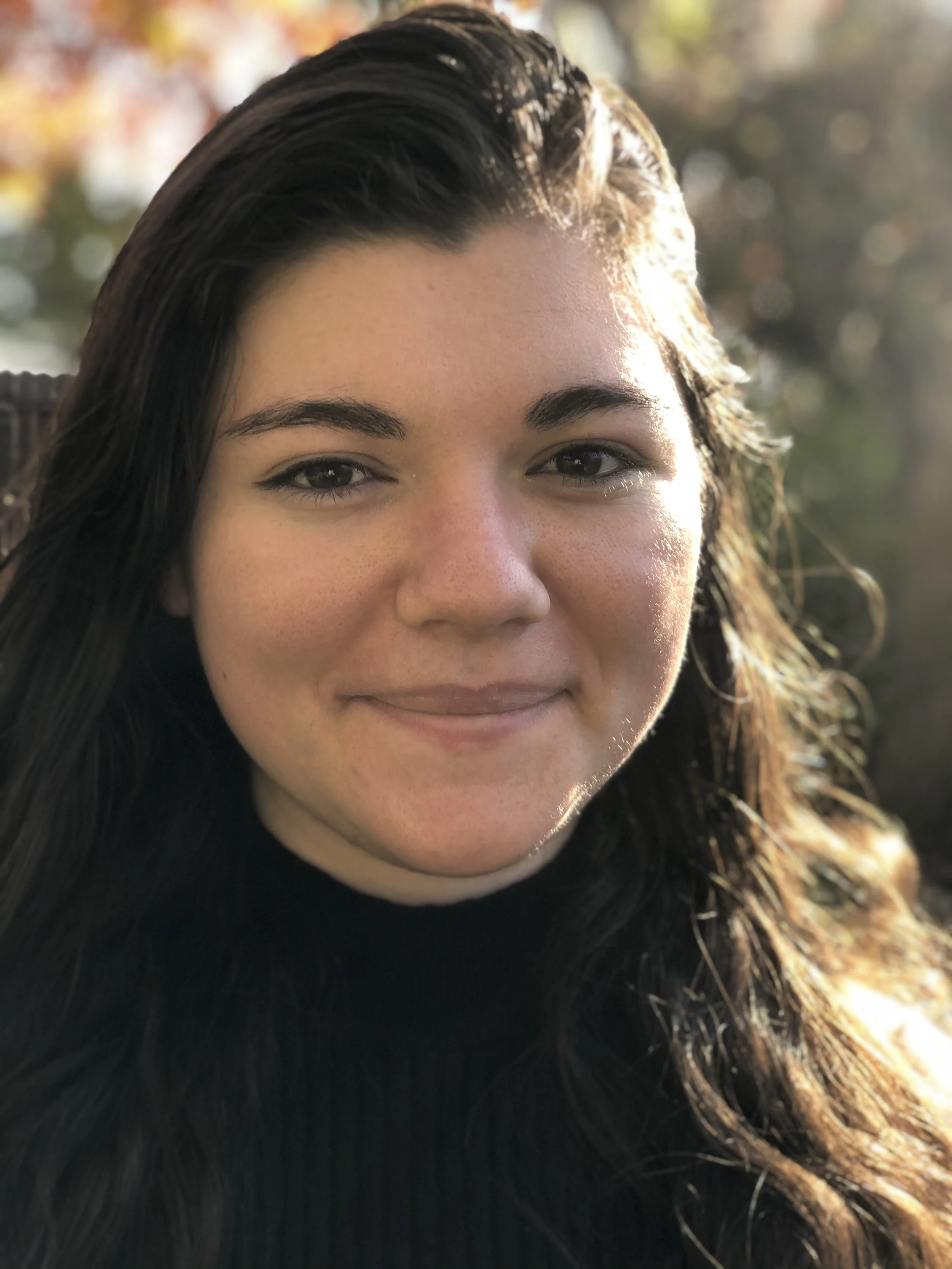
Joanna Glum is a family caregiver from California who works as a writer, filmmaker, and educator. As an advocate, Joanna is currently tenured with California’s Disability and Aging Community Living Advisory Committee (DACLAC) and serves with California Coalition on Family Caregiving, which Joanna represented with Dr. Donna Benton at Caregiver Nation Summit 2025 in Washington D.C.
From short films that follow a pair of feet throughout their day of caregiving to essays about her grandmother, Joanna’s works have been featured from Palm Springs ShortsFest to Roxane Gay’s The Audacity and supported or recognized by Sachs Program for Arts Innovation, Vermont Studio Center, and American Zoetrope Screenplay Competition, amongst others. She has taught from The Adroit Journal to UC Berkeley original social justice documentary theatre pieces with some of
the finest artists (and students) in California.
Joanna writes of old age, social striation, failures in American care, and the myriad ways women bear the burden of reconciliation, and she believes that stories of care are everywhere should we choose to really look. Find more at www.joannaglum.com
Watch You Should Get Out More. A short film by Joanna Glum. Use “elaine” as password.