
Real Working Caregiver Stories
Actual working caregivers share their stories.
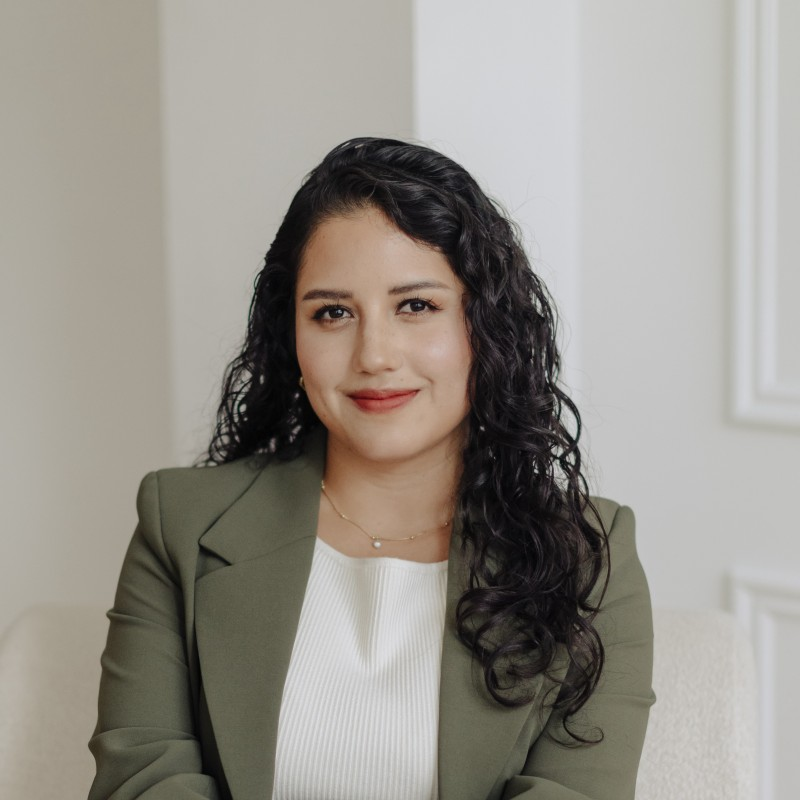
Carla Velastegui 2/11/26
Selma: Hello, everyone, and welcome to our series of Real Working Caregiver Stories. I'm Selma Archer.
Zack: I'm Zack Demopoulos.
Selma: We are so excited to have our guest with us today, Carla Velastegui… Welcome, Carla!
Carla: Hi, Zack and Selma. Thank you for having me here and for welcoming me into this space to share a little bit more about my story. I'm really excited!
Selma: So we'll just get into it. Let's start by having you share your care story. I know you told me that you started your story at a very young age, so let's talk about it.
Carla: Yes, so I got thrown into the world of caregiving in my early teens. My mom was diagnosed with young-onset Parkinson's (YOPD) in her mid-40s, and at the time, my mom didn't speak fluent English. We had never really had any experience with the healthcare system, and so all of this came as a wave… full of unknowns. At the beginning, for me, I didn't even know the word caregiver existed. I was just a daughter who was showing up for her mom, who was helping with translating appointments, advocating, and making sure that she knew what was going on, and what her care plan would look like. And so… that's been my world since then. My mom has been living with YOPD for 16 years now.
And as her needs have changed, what caregiving for me looks like has changed as well. Definitely, it's more medication management, appointments, coordinating, handling paperwork, tracking symptoms, coordinating with different providers, all these little actions that are essential to her care and to her well-being, but that also add up. I think just throughout this whole journey, I've realized that caregiving isn't just a one-person or a one-family situation. Its multiple systems are supporting, and at times not supporting, caregivers and people supporting loved ones navigating a tough health condition.
Selma: As you transition through the whole caregiving process of your mom with Parkinson's… you started 16 years ago, do you think that's gotten less difficult from the beginning to where you are now? Has the care gotten more difficult or less difficult as the years have gone by?
Carla: I think it's a mix of both in some ways. Definitely, some of the needs have increased. It is a degenerative condition, and so my mom definitely needs a lot more support. But I would say that I feel like now we have a bit of a group, or now I also know where to find resources, where to reach out, how to advocate, how to ask questions, how to be able to support my mom. I always say doctors are specialists in their fields, but I truly do think that we, as caregivers, are specialists of the person that we care for. Now I've had 16 years of being, Gina's, who's my mom, Gina's caregiver. In some ways, it has gotten easier to show up better for her and to be able to advocate for her, for her needs. But it also comes with its challenges of just supporting someone with a degenerative, chronic condition.
Zack: I love what you said. We're the specialists for the person we care for. We haven't heard that one, Selma. I love that. I can agree with you. We may be in front of a specialist who's got years of medical school experience, of course, and patients, but we know the person we care for the best. How is your mom doing?
Carla: She's doing okay. We have some good days, and we have some okay days. We take it one day at a time. We take it one week at a time, and we're really focused on what is her quality of life. For her, that's being able to go outdoors, walk, do activities in the outdoors, and be able to keep as much independence as possible…
Zack: For someone in their teens, it had to be completely challenging and overwhelming because it's very challenging and overwhelming for older caregivers, but in your specific case, were you going to school? Were you working?
Carla: I was in school then. I was in high school and I would say back then, I didn't even know that the word caregiver existed. I didn't know for quite a few years, actually. Going through this experience, it was like I was living two different realities. One was going to school. I'm trying to decide what courses I'm taking, and I was also a cheerleader back then, so preparing for competitions. Eventually, deciding where to go to school, what do I want to study…
And then my other reality was going to the ER, hospital visits, trying to contact different providers, drive to appointments, advocate, translate, follow-up on certain medications, all these different little things, and so, I would say it was very overwhelming, very isolating. I didn't know anyone else who was navigating the same situation that I was navigating at my age. And there also wasn't a lot of supports that existed out there. So it just felt like, this is what I'll throw in my way, there's nothing my school can do, nothing a guidance counselor can do… it was definitely a very lonely, overwhelming, and at times frustrating journey, especially at such a young age of trying to navigate supporting a loved one alongside everything that a teenager wants to do and explore and learn.
Zack: If you don't mind sharing just a little bit more about that, because we've had a young caregiver in our series, and he shared some really honest, painful things. If you don't mind sharing what it was like when a lot of your peers, a lot of your friends, even family members maybe, didn't get what you were going through. How did that make you feel, and how did you deal with that?
Carla: A memory that I have very fresh in my mind, very ingrained, was I was deciding where to go to university. And, I had all my peers around me, and everyone wanted to get away from home, and move out, and be as far away as possible, and all these different schools. For me, an additional factor that I had to consider was I knew that I needed to be close to home in case if there was an emergency, in case that I needed to drive my mom to an appointment and help translate, that I could easily be accessible and show up for her.
And it was just something that other people didn't really get. And it was something that I didn't really share, but it was definitely a factor that I knew was very important in how I wanted to show up for my mom's care. So it was definitely challenging to have this added responsibility, and this added… cognitive load that some of my peers didn't have, and that even some of my guidance counselors couldn't really understand or know how to support me in those situations, which, again… left me isolated, feeling a little bit overwhelmed. And just feeling kind of defeated at times, because there was really nothing or no one there to help navigate what that looked like, or even a support, an existing system in place that could actually help me as a young caregiver navigate what this looks like.
Zack: Thank you for sharing.
Selma: Did your caregiving experience, taking care of your mom influence the work that you do now?
Carla: Absolutely. In every way. Being involved in the healthcare space, I got exposed to so many different parts of healthcare that I knew I wanted to go into that world. For me, seeing early on a lot of the gaps that existed and some of the inefficiencies that we see around our healthcare systems, I knew that I wanted to go more into the tech world to see how technology can help make healthcare more accessible, more equitable, and just generally, more scalable, in a way. Because we would always be sitting in the ER offices, or have the wait times, and I thought there had to be better ways…
And then when I would step back and look at work with technical teams and product teams and ask, who do we talk to? Who do we interview? Who are we designing for? And I started realizing that we were seeing these gaps that, oftentimes, businesses and organizations are designing for the easiest to serve patients. Everyone else is falling through the cracks, or we're not actually taking the time to understand some of the potential trust issues that people may have, or some of the inefficiencies of rolling out this whole new tool into a clinician workflow or into a family caregiver that just won't make it realistic to incorporate.
Then I started moving more into advisory governance roles. Now I work with researchers, with some government bodies, with some tech companies, around how we embed caregivers and patients into design, into policy, into programs. Not just as a token voice, or just as a checkmark that we select and we move on, but as co-designers, so that we're looking at it from a risk management perspective, from a quality perspective. And that we are truly designing for our end user, which is the patient, and incorporating that into how we are thinking about these new technologies that we're hoping to roll out in the way that we deliver healthcare.
So, absolutely. It's been influenced by my experience supporting my mom through the healthcare system in every way… I need to be able to make it better and help to make this space better for so many other people who don't have all these privileges that I have, and so that's absolutely a driver for me as well in this space.
Selma: What role does AI play in helping patients and caregivers make better decisions currently, and how do you see it changing in the future?
Carla: I think the biggest one that we can see is it can help us reduce some of that cognitive load that we're just carrying all the time. So, those reminders, those appointments, those calls, those notes, I think AI can really have the opportunity to help us remove some of those kind of manual tasks that we do on a daily basis… A really, really big one, and a huge important one that we're seeing right now is also the ability to be able to use AI… to help us better understand the condition that we're navigating. Help us understand, the best way that we can use our treatment care, and how do we apply it to the everyday reality that we live in.... I'll share a quick example... The fact that I can now input some information that I need to communicate with my mom, and just have it translated in a few seconds in a way that my mom can understand it, has been a huge weight off my end in terms of that cognitive load of me sitting and having to type everything.
I think something else as well is it can help us with better understanding some of the data that we have. We have so much data that we collect through whether it's a phone, a watch, a device that we're using, even data on medications. And it's really hard as a person, as a patient, or as a caregiver, to be able to make sense of everything, and then to be able to apply it to your health. And this is where AI has been really, really impactful in helping us make sense of that data, and then helping us be more prepared, more ready when we show up to those appointments… we can discuss that with our provider, so that they can also make the best decision based on all this information that we're now able to provide them that process, summarized, and concise.
….The one item I also want to make sure we do talk about is that AI and technology, at the end of the day, it can be a supportive tool for us. But it's never going to replace that human care, and that human love that a provider, caregiver or a clinician can provide….
Zack: Wow, you really were influenced by your caregiving experience… and you're applying your lived experience to whatever it is you're doing which the recipients are going to benefit from whatever you're working on, Carla, so that's awesome that you've picked this career. I see that you tie in caregiving to almost everything. I saw there was an announcement that you are on Canada's Drug Agency. Congratulations for that! That's a big role. When you announced it, you said your role is… to make sure that caregivers and care recipients are being connected for a better healthcare system. So you're working on healthcare systems, I understand, even outside of Canada, right?... Are you seeing any best practices that we could pick up that maybe other countries listening in might say, hey, that might be a good idea, we should try that?
Carla: Yes, I want to start off by saying I don't think we have a country right now that's getting it perfectly, and that I would say they are doing the best, and they're 100%, and that's the gold standard. But I do think that we're getting there, and I see it across different continents. Everyone has something that's working really well, and everyone has something that they're trying to work towards. I just want to start off by saying that no country has it perfectly right now.
But I will say that something that I have noticed, more in the European health systems, is there's a little bit more of larger awareness and societal supports in place. For example, when we look at Germany, there is mandatory long-term care insurance… family caregivers can receive some benefits when they're caring for a loved one. What this means is that they can also continue receiving pension contributions, which is a huge issue when people drop out of the workforce and then they are unable to contribute to their own pension themselves…
Then when we look at, Sweden, for example some of the Nordic countries, we see elder care specifically a little bit more centralized across different parts of society. So the load doesn't just fall on families. What I mean by that is there is subsidized elder care. There is more accessible in-home supports for people. There isn't that assumption that the care will fully fall solely on families, but it's going to be… a shared responsibility.
The other part is the larger theme that I've noticed across all is really around the idea of recognition, which we don't often see it across Canada and the US… There's some structured programs in place, whether it's workforce protection or workforce leaves, or subsidy supports for home care, or some of the financial recognitions for family caregivers. They're embedded into policy. They're embedded into structures… In the US and Canada, we have some of those pieces… but they're a little bit fragmented, and they're a little bit challenging to access if you don't know about them…
Caregiving is not recognized across society, or in our systems yet, or in our policies, and so it's kind of a one-off, depending on, again, where you're located, who you're working for, what healthcare system you access, who your insurer is. So that's a bit of the differences that I see and that I hope I'll be able to continue learning more about all the systems across the world to be able to figure out where are the places that are doing it really well. And where are the places that caregivers are able to succeed and thrive in both caring for their loved one, but also in being engaged and active members of their society.
Zack: Well said, and I agree with you, and especially when you said this doesn't fall necessarily on one person's shoulders. It is societal, it is personal family, it is friends and other resources. But it is also an employer. You work on a lot of boards. Are you on one that directly speaks to an employer? What would you say to an employer today if you had a suggestion to give them?
Carla: Yes, I do some work with employers or some larger employer organizations to be able to bring awareness around caregivers and what that looks like when we look at the workforce…. across Canada and the U.S it's about 1 in 5 individuals is a caregiver… and that number will only continue to increase. It's a reality, it's happening, and it's invisible….
I would probably say, one of the biggest things is to normalize it and operationalize it. And what do I mean by that is we're not just here creating awareness and saying caregivers exist, but what that means is, how do we recognize that our workforce at any given level of seniority, at some point or another, will be a caregiver, across every single industry? How do we have the right supports internally, and what that could look like? How do we train our managers to be able to know how to have these conversations with their teams? How do we set up clear structural supports internally so that there are, for example, structural policies for leaves, structural policies for flexible workplaces, for hybrid?
When we look at benefits, how do we think about an inclusive idea of benefits that include dependents, and when we think about dependents, not solely children, but also dependents who are adults? Because that's something I often come about is that I haven't found an employer who considers my mom a dependent. However, if I had a child, it would be a dependent. I often think about how do we think about some of the existing benefits?...
I also think about some of the larger retention perspective. It costs employers thousands of dollars when an individual leaves, and when they have to, they lose that skill set, they lose that knowledge, and then they have to interview, hire, retrain, and potentially might not even work out. How do employers have the right supports in place so that when an individual is going through a crisis, or when a caregiver is shifting into a caregiving mode, or having to deal with an unexpected health issue, you have the right support in place for this person to be able to focus on their caregiver responsibilities, but also continue to be able to thrive at work and show up? Because then when that situation ends, when things settle a little bit, they'll come back. They'll want to be able to show up for you as an employer. They won't think about leaving you because you showed up for them when they were going through a tough time. And so, what do you have there? You have retention.
It's not just a nice-to-have, there's a business model behind this. It's being a smart employer to be able to set up the right support. And then we may even think about how I often think about … there are very well-established parental leave and parental support programs and I often think about, we don't even have to create a new program, we just have to adjust it slightly to include caregivers. How can we do that for caregivers so that we can also have a caregiver leave program? We can also have a back-to-work caregiver program, the same plan… the way that parents have a back-to-work or re-entry program. How do we do that for caregivers?
So that's kind of an area that I think there is a huge opportunity for workplaces to be able to think about, incorporate, so that they remain competitive. They can remain and make sure that they are attracting and retaining some of the most competitive talents and great skill sets. Because I will say, caregivers are extremely resourceful. We're amazing project managers. We're great communicators. We have great empathy and ability to deal with stressful situations. These are skill sets that we are coming and bringing ourselves to work. I think employers who will understand this will see and take this as an exciting opportunity to be able to shift so that they can retain talent, and those who don't, will lose over time quietly.
Zack: Wow, you just recapped our entire book? That was amazing!
Selma: I was thinking the same thing, wow! We hear our guests when they talk about the support or lack thereof with their employer… The power of support … does develop loyalty, and those employees are going to stick it out because they've gotten the support that they needed at the time they needed it. They're not going anywhere. It's true what you're saying.
Carla: And it's word of mouth, the other one as well, when you feel supported and you trust an employer. If you see someone in ER, if you have another family member, you say, this employer was amazing to me when I was going through this. I would recommend applying to them.
Selma: If you look back to Carla, the teenager, before she started her caregiver journey with her mom, the cheerleader, the fun kid, before she had all this responsibility, what would you say to her to help her prepare for her journey as a caregiver?
Carla: I would say, language matters. Knowing you're a caregiver and recognizing that, it allows you to advocate for yourself. It allows you to advocate for the person that you're caring for. I think that's a huge one, especially as a young caregiver who sometimes our systems push back when they see someone like us trying to support a loved one. And the other one that I would say is extremely important is your care and your health. Your well-being matters just as much as the person that you care for. When we are not ourselves well physically, emotionally, mentally, then we're actually not going to be able to show up for a loved one in the way that we want to, and it doesn't help anyone. When we burn out, it just creates such a challenging situation, and we need to prioritize our well-being as well. Don't wait until a crisis. Really take that time, that space, that care, those professionals, that class, that help you refill your cup and help you make sure that you are staying well. I think oftentimes caregiving, it's not a sprint, it's a marathon and so we’ve got to build that endurance for the long term.
Zack: That was beautiful. I can tell you've been a caregiver, and you still are.
Carla: Yes it's definitely a core of who I am, absolutely.
Selma: How can people get in touch with you? How can they find out more about the work that you're doing?
Carla: Yes, of course. So you can find me on LinkedIn under my name, Carla Velastegui. I'm also on Instagram, and also BlueSky, and access Carla Velastegui, and my website is coming out in probably the next few months, CarlaVelastegui.com as well. Feel free to reach out, anyone that's working with patients, caregivers, and anyone that really wants to chat about how do we bring more awareness to the space, absolutely, reach out. It's an area that I'm very, very, very passionate about, as you can probably tell.
Selma: Just a little bit!
Zack: Your mother, Gina, is very fortunate. As you are, I'm sure, to have a great mother as well, but she's very fortunate to have you. Wow, you rock!
Selma: Definitely. Thank you so much, Carla, for joining us today. It's been incredible.
Carla: Thank you both, I really enjoy this, and I'm so glad that we can bring awareness to caregivers.
Selma: Absolutely.
Zack: Thank you so much.
Selma: Team effort!
Carla Velastegui is a health technology professional and cross-border health systems advisor who integrates lived experience into healthcare innovation and implementation. Since 2010, she has been a care partner for her mother, who lives with young-onset Parkinson’s disease — an experience that shapes her work across digital health, system design, and caregiver inclusion. Carla works with researchers, startups, healthcare institutions, and advisory bodies to identify system gaps and ensure that emerging solutions reflect the realities of patients and families. She serves on the boards and advisory committees of organizations including Canada’s Drug Agency, Acclaim Health, the Parkinson’s Foundation, and the Canadian Centre for Caregiving Excellence. Her focus includes caregiver engagement, health system equity, and the responsible integration of digital and AI-enabled technologies into care delivery.