
Real Working Caregiver Stories
Actual working caregivers share their stories.
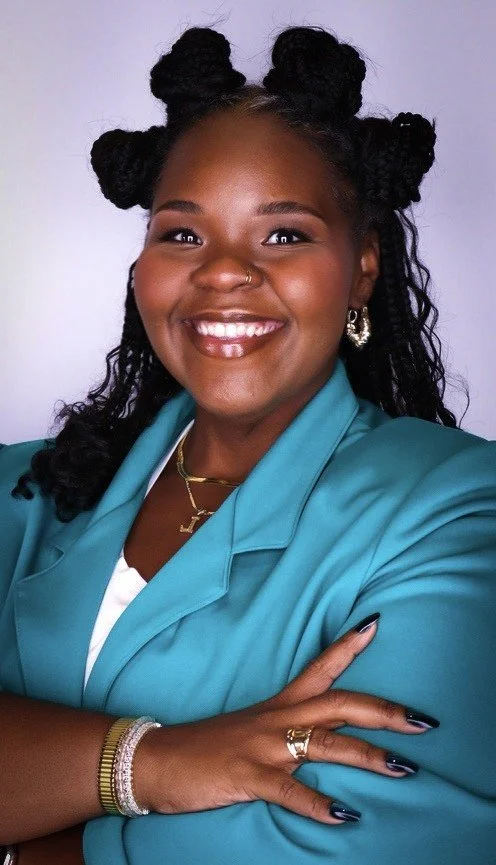
Brittany Hogan 1/13/26
Zack: Brittany, thank you so much for joining us today. We like to start by asking our guests about their caregiver journey. Could you please share your story with us?
Brittany: I moved back in with my mom during COVID to quarantine with her and realized pretty quickly that what was going on with her health was more serious than I thought. She was preparing for a double lung transplant and dealing with other complications, and I started getting more involved in her appointments. That’s when I realized how much I didn’t know. She began leaning on me more to remember things, step in, and help make sense of what doctors were saying.
In 2022, she was hospitalized with pneumonia, and from there everything kind of started crashing into each other. There were repeated hospital stays, infections, rehab transitions, and more complicated decisions. She was placed on a ventilator multiple times. Hospice was brought up at one point. There were also times when facilities did not want to admit her because her case was so complex.
When she came home in early 2023, the level of care she needed was intense. I had to take care of a wound she developed in the hospital. I had to manage IV nutrition. She had a feeding tube that required daily attention. Medications were around the clock. It was skilled-level care, and I am not a nurse. I had to learn quickly and lean on medical professionals and family just to keep up. Sleep was not really happening. It became a cycle of hospital, rehab, home, and back again.
Eventually, in November 2023, after a long fight, she made the decision to stop aggressive treatment. That was incredibly hard, but it was her choice after everything she had been through.
It was a very tough journey. It was very hard. I know it was not as long as a lot of people’s, but it was intense. Outside of the medical issues, there was the constant heartbreak of thinking things were getting better and then realizing they were not. She was working hard and sometimes being told it would not change the outcome. The emotional toll of that was heavy. But so was the fight to be heard. The fight to be seen. The fight to be recognized as someone with a voice in the room.
That part of my journey is what ultimately led me to create the solution I am working on now.
Zack: Wow. That is an incredible story, Brittany. What's your mother's name?
Brittany: Marilyn.
Zack: She has got to be so darn proud of you. Were you working at all during any of that time?
Brittany: I had to stop working. I am in TV, production, and filmmaking. I have my own production company where I produce independent films, and at the time I was also working with someone managing COVID testing operations on movie and television sets. I had worked my way into managing that entire branch of the company.
But when everything started happening with my mom, I could not sustain it. At first, I tried to keep working a few hours at a time, maybe two or three hours a day. Even that became difficult because once I realized how much oversight her care required, I created a system where I was fully looped into the care team. Nothing moved unless it went through me. It was hard to work while trying to manage that level of responsibility.
Eventually, it took a toll financially. We went from good insurance to Medicaid. From a steady paycheck to living off savings. There was little income coming in beyond the few hours I could manage each week.
I talk a lot about the hidden costs of caregiving because people do not think about them. My mom was at Northwestern in Chicago. Parking could be $14 a day, and if I was there all day, it was closer to $30. I did not have the energy to cook, so that meant buying food almost every day. Gas going back and forth. Driving an hour and a half to the hospital. And there were days I had to say, I’m sorry, Ma, I can’t come today. Not because I did not want to, but because I was exhausted or did not have the gas money.
When you cannot work consistently, those costs add up quickly. It becomes two people living off one set of savings. That reality is something many caregivers quietly navigate.
Selma: Brittany, before you made the decision to leave your job, did you share your caregiver situation with your boss or any colleagues?
Brittany: They knew all about it. I’m a yapper, so I talk. It was a small team, and my employer at the time, we’re still very close now. She was also a caregiver for her father, so she understood what I was navigating.
I’m grateful to God for that season because even when I couldn’t work consistently, she still tried to find ways for me to contribute. She produced my short films and paid me as a director when I was able to work in that capacity. When I had the bandwidth, I would help with different projects or tasks within the company. It allowed me to stay connected professionally without pretending I could function at full capacity.
I’m very aware that my experience is not the norm. In my research now, I talk to so many caregivers who are afraid to say anything at work because they don’t want to seem unreliable or like they might disappear at any moment. And that fear is real. I’m grateful that wasn't my experience.
Selma: What do you think employers can do to better support people in your situation?
Brittany: I think flexibility is huge. We already understand flexibility when it comes to sick time or taking care of a child. Caregiving is no different. If someone is dealing with a chronic condition in their family, there should be built-in ways to adjust. That could mean flexible hours, remote options, or the ability to step away for a few days without fear of consequences. Caregiving is not always a one-time emergency. Sometimes it is ongoing.
I also think employers can do more to provide access to financial and educational resources. Since my journey, I have learned that there are caregiving tools and support systems that I did not even know existed at the time. If employers are informed about what is available and can connect employees to those resources, it removes some of the pressure.
Because the pressure is real. You are trying to keep someone alive or help them recover, and at the same time you are thinking, I need to get back to work before I lose my job. That is an impossible mental load. No one should feel like they have to choose between their loved one and their livelihood.
Zack: It's very obvious that you have had a very thorough caregiver journey. Just listening to you talk and using the lingo that Selma and I have heard over the seven years of research that we've done, hidden costs. You did a great job of describing that. You run the care team. You did a great job of describing that, and the ability to identify at work or not identify at work. You're nailing all the issues. I could see why you've gone on and created something, a solution based on your experience, I'm assuming, right?
Brittany: Absolutely. I think I realized the problems while I was in the middle of them. I have a degree in engineering, so my brain naturally looks for systems. If something is not working, there has to be a better way to do it. Even while everything was happening, I kept thinking there has to be a better way to make this make sense.
I learned quickly that I could not just show up emotional, even though I had every reason to be. The emotions were real. I was exhausted. I was scared. But if I wanted to be taken seriously, I had to be informed.
So I started recording conversations. I took notes on my phone. If someone mentioned a medication, I asked for the exact name and spelling so I could research it later. I took pictures of labs and went home and looked up what the numbers meant. I did not want information flying over my head. I needed to understand it.
There were moments when things did not sit right with me. When that happened, I asked to see the labs. I asked more questions. And yes, there was a time when I calmly said, this is how Black women die in these institutions when you do not listen to us. That was not me being dramatic. That was me naming something that is very real in our community. I needed them to understand that dismissing concerns has consequences.
At the same time, I knew I could not afford to be shut out. I did not want to lose access to the room. I did not want to lose the ability to advocate for her. So I had to stay steady. I asked for a patient advocate when I felt we were not being heard. I positioned myself as part of the care team. I made it clear that I was listening, that I was capable, and that they could trust me with the information they were giving.
Eventually, they treated me that way. They called me during rounds. They explained what they were seeing. And at one point, several of them thanked me for being engaged and prepared.
That experience made me think about caregivers who do not have the stamina to do all of that. You can be heartbroken and still have to make clear decisions. But to do that well, you have to understand what is happening and feel confident enough to speak up.
That is a big part of why I am building what I am building.
Zack: Tell us about Fairgiver. Why is it called Fairgiver? And second of all, tell us what Fairgiver does.
Brittany: While my mom was still alive, we would talk about how hard everything was. I remember thinking, once I really understood what a caregiver was, I do not know if I am good at this. I am trying. I am learning. Maybe I am not great, but at least I am fair. That is where the name Fairgiver came from.
I wanted something people could literally hold in their hands. When I started researching what already existed, I saw there are many tools that track medications, notes, and reminders. Those are important. But for me, the biggest gap was understanding what is being said in the doctor’s office.
That moment when a specialist sits you down and says, this is what is happening. Do you have any questions? And you are trying to process everything without looking confused or asking them to repeat it three times. That was the starting point.
So the MVP is what I call the Clarity Companion. It is an AI-powered tool designed to help caregivers understand and process medical appointments. If you go into an appointment and the provider agrees to recording, you record the conversation. If they do not, you repeat back what was said in your own words and record that. Either way, the tool generates a plain language summary. It outlines what was said, what to watch for, and suggested follow-up questions based on that specific appointment.
You can also log notes throughout the week, just like a voice memo. If you notice a change in breathing or behavior, you record it. You can log medications. Then, when you go back into an appointment, the questions generated are not just based on that one conversation. They are informed by what you have tracked over time. So if something has been off for a week, it can prompt, could this be connected?
Fairgiver will eventually grow into a broader ecosystem. But right now, I am focused on that gap between hearing information and actually understanding it. Especially for new caregivers, millennials, Gen Z, people with full lives who are suddenly thrown into something overwhelming. I remember thinking, how was I supposed to know this? What am I supposed to do now?
That is what I am building Fairgiver to answer.
Selma: What is your vision for Fairgiver for the next five to 10 years?
Brittany: In the next five to ten years, I want Fairgiver to grow into an ecosystem that truly empowers caregivers to advocate for their loved ones and to partner more effectively with healthcare organizations. Caregivers should not be the forgotten party in this process.
Healthcare systems are building tools, but most of those tools are designed from their side. They are focused on efficiency, protection, and workflow. I want to build something designed from the caregiver’s side. Something that centers their experience, their clarity, and their voice.
Beyond the MVP, I see deeper connection points. Educational support. Practical guidance based on real experiences. The tips and lessons I had to learn the hard way. I want to design tools that reduce the learning curve so people do not feel lost at the beginning of their journey.
There are already chat boxes where you can ask how to phrase a question. But this experience is deeply human. I want to use AI as a tool, not a replacement. The goal is to give caregivers structure and clarity while still honoring the emotional reality of what they are going through.
I am not trying to recreate what already exists. I want to build something that helps caregivers move through the journey with more confidence, better information, and a stronger voice.
Zack: I met you through LinkedIn when you did a nice post about your experience at Caregiver Nation Summit. Could you share for our readers what you wrote in that post, that something shifted inside you? I really loved how you talked about advocacy is not always loud. It's sometimes steady, informed presence in the right rooms. That's powerful! Do you mind just briefly sharing what your experience was there and how it’s going to impact what you're doing with Fairgiver?
Brittany: That journey was traumatizing in ways people do not always see. The memories are still very real. For a while, I questioned whether I would ever have the capacity to advocate the way I did in the hospital again. That kind of advocacy takes something out of you.
What shifted at the Caregiver Nation Summit was realizing that advocacy does not always have to look like standing at a bedside pushing back. It can be steady. It can be informed. It can be showing up in the right rooms and speaking clearly.
I realized I do not have to be physically in a hospital to help someone. I can help by giving them tools. By showing them how to speak the language. By helping them feel more prepared before they walk into those rooms.
There is still a big part of my heart tied to the pain I experienced. And when I see other caregivers going through similar situations, I feel it deeply. But instead of reliving that exact role, I can build something that supports them.
If I do not have it in me right now to advocate bedside in that same way, I can advocate systemically. I can build this platform and get it into the hands of caregivers. I can work with employers so they say, here is a resource for you. I can go to Capitol Hill and speak about policy. I can tell my story.
I did not realize at first that telling my story was advocacy. I thought it was just something that happened to me. But I am learning that raising your voice, even calmly and strategically, is advocacy too. And I do not think I would have the confidence to do that now if I had not practiced it during my caregiving journey.
Selma: How can people get in touch with you and learn more about this amazing tool, Fairgiver?
Brittany: They can visit fairgiver.co and email me at hello@fairgiver.co if they have any questions. In January, we're hoping to launch the pilot program and we'll be testing the MVP, (minimum viable product), with a few people. So if people are interested in that, I would love for them to reach out. If they have any suggestions, I'll be here.
Selma and Zack: Thank you so much for sharing your story!