
Real Working Caregiver Stories
Actual working caregivers share their stories.
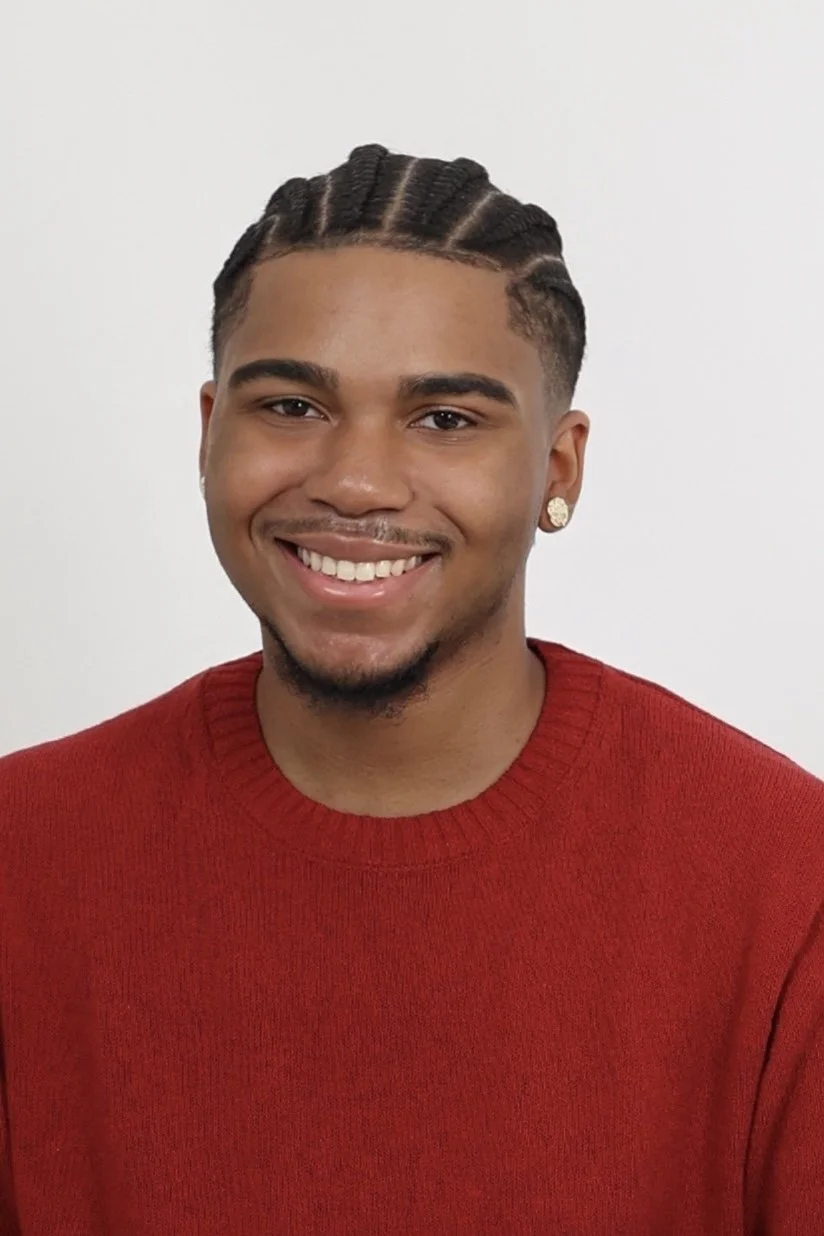
Omarion Calloway 12/9/25
Selma: Omarion, you were only 10-years-old when you began your caregiver journey. Can you share your story and how your experience has shaped your life as an adult?
Omarion: Yes, it all started when I was very young. I grew up in Montgomery, Alabama. I used to stay in this house with my nana, my uncle, my mom, and my little brother. One day, our house, my childhood home, caught on fire. I was the one who found the fire and called 911…. After that day, that's when things started falling apart. That day, we lost a lot of things in that home, a lot of memories, a lot of my childhood toys, a lot of things that I couldn't have gotten back… Everything just went downhill.
When we became homeless, we moved from home to home, finding comfort in other people's places. Really never found a comfortable place to just be still. After that, my uncle had a stroke… he became paralyzed from the waist down. He couldn't move. He couldn't talk. He couldn't eat proper food or anything like that. And then months later, we found out that my grandma was diagnosed with cancer, and she was already on the oxygen tank. She couldn't breathe on her own. She had an oxygen tank that she carried throughout the house…
Once we finally settled on a place to live, it really wasn't a home because I wasn't a child anymore. I had to do things that no child should ever have to do. I had to learn how to administer insulin into my uncle's arm at a very young age. I had to bathe him. I had to change him. I had to learn how to work the remote-control bed that he was in, which went up and down, to lift him, to turn him over, to change his diaper, and to have my fragile body as a 10-year-old try to move him out of the bed and put him into the wheelchair. It was very hard, because my mom wasn't there. My grandma was there, but she was sick herself. She couldn't take care of herself, so I had to do that as well. My younger brother didn't really know what was going on. He was just there by the sidelines, watching me.
I had to do a lot of things, especially for my uncle. I had to cook because he couldn't eat regular food like other people could…. I had to blend it up for him. At a very young age, I had to learn the procedure for when he had a seizure, because oftentimes throughout the day, he would have a seizure. And my mama taught me how to do that. She taught me how to lay his head down. She taught me how to wait until it was over. And if it persists, she told me to call 911. And I knew all his medical files. I knew he had diabetes. I knew all his medical history, just in case things like that happened.
And for my nana as well, I had to bathe her, had to walk her to the tub. And at a young age, seeing your grandma and your uncle naked, it just does something to you. A child should never have to do that. A child should never have to clean after human fluids. A child should never have to learn how to use syringes. A child should never have to learn the procedure to handle a seizure for their uncle. A child should be reading books. A child should be learning, going to school with friends. I didn't have friends. I was even bullied in school because of the clothes that I had on. My mom couldn't afford the things that other children could because my uncle could barely afford healthcare. So those were some of the things that I've been through as a child.
Selma: So, you were caregiving for two adults, helping your grandmother, helping with your younger brother, and going to school at the same time. Did you share your experience with your teacher, a counselor, or an adult you went to for support?
Omarion: It was just mostly my mom… It was just her and me. But she did do a very good job by being a single mother. And I know it was hard for her because at times I heard her cry in the shower. I heard her cry at night, but she didn't know I heard her, but I did… I'd been caring for my uncle all the way up till I went to college in my freshman year. But I think it was the summer that I was supposed to go to college that my uncle passed away. My nana passed away around 2015. That was like the actual time death was introduced to me… It did something to me. I don't know. I didn't cry like most people should. It really never hit me until my uncle passed away. That's when everything hit me. It took me a while to adjust to college life… because I didn't know how to adjust to a world where caregiving didn't exist….
Zack: Your mother must be so proud of you. You shared with us before we started that you're hoping to do a career in storytelling, whatever that might look like. You're really thinking through your future. How has caregiving in your early years helped shape what you want to do with your life?
Omarion: My mama always used to tell me that everything that I thought was drowning me actually taught me how to swim. Taking care of my uncle, taking care of my nana, and even my little brother taught me how to care for people. It taught me how to lead. It taught me how to defend myself, because back then, I used to be bullied. I used to go through a lot of things because people thought I was the teacher's pet. I was the smart one in class. People didn't like that. The teacher was giving me benefits the others didn’t receive because I think my teacher, deep down inside, I didn't tell her what was going on, but I feel like she knew. Because after my story hit the news, she was the first one to contact me. She came to my graduation. I'm still in contact with her today…
Zack: Wow, that's incredible. What experiences do you feel have helped you succeed in life, and also in school? Leaving mom in Alabama, going to NYU, and being in a foreign environment? That is a big adjustment.
Omarion: I would say it taught me how to be strong, to defend myself.
But back when I was caregiving, I learned how to defend myself and defend people. I learned how to defend my uncle… my grandmother, and even my little brother when people used to pick on him at school. So going through all that and then learning how to defend myself now, especially in New York City, when the city loves to try people…I am a really nice person, but coming to New York City taught me that you can be nice, but you must learn how to defend yourself sometimes, because we're really going to need it. Back when I used to be bullied, I didn't defend myself a lot. So, now I'm very proud that I can do that.
Selma: Anyone who has not taken the opportunity to read your website, morethansurvivalguide.com, the things you share are so powerful and so wise, and anybody who reads your website will be captivated by the stories you share. One of the sections that you have is “mental health matters.” You talk about caregiving not only changing the person that you're caring for, but it changes the caregiver as well. Can you talk a little more about that?
Omarion: Yes, because I remember at a very young age, around the time I was caregiving, I noticed my mom, her mental health… it changed. When I was younger, she was very lively. She was very interactive. She always had a smile on her face… And then, after things transpired throughout caregiving, she just changed… I noticed sometimes she would isolate herself in the room. Sometimes she would cry at night. And sometimes she would leave the house and not come back for a few hours just to get out of the house. And those types of things I noticed affected her mental health very well; caregiving did…I remember the time when I walked in on her, trying to kill herself. And no child should ever have to witness their mom trying to do that. I talked her out of it. I told her a lot of things. But if she had done that, imagine, I don't know what my life would have been without my mother. I don't think I could live a life without my mother because my mother is my backbone….
After seeing her go through that, I know my mental health started to change as well. From the age of 10, all the way up to high school, I started dissociating as well. I started to dissociate from my friends, and started to dissociate from my school work. I just started to fall behind. And yeah, there was a point where I thought about suicide as well because that's what my mother had thought about. Hey, if my mama thought that way, I don't know. But going through that, it just made me think that no child’s mental health should ever have to be affected that way. So, I started journaling. I started writing my feelings out. And once I got to college, I started therapy because in a black household, a lot of black people tell you that therapy is not good for you. What do you need therapy for?! But therapy really helped me, and it's helping me today.
Selma: You talk about the importance of self-care in a very interesting way that I've never heard anyone talk about before. You say, ”Self-care is giving yourself permission to eat first instead of last…You are still worthy of happiness, and you deserve to enjoy life, not endure it.” Can you speak more about that?
Omarion: Yes, because when I was caregiving, I always put my uncle, my nana, my brother, my mom, before me. And no child should have to do that, especially as a 10-year-old…I used to wake up early in the morning, cooking for my nana, cooking for my uncle, and sometimes my little brother and even myself. And at times, I fed my uncle first, then I went towards my nana, then I went towards my brother. And I just know this pattern of I'm always putting myself last, and I shouldn't have to do that, you know? A child should never have to put themselves last, especially at a young age like that. So over time… I started feeding myself first. I started going on walks. I started doing a lot of things for myself to put myself first because I felt like if I put myself first in my mindset, that I would be okay, that things would get better, that I would learn how to still be myself, how to still be that foundation of care for my uncle, my nana, and my little brother.
So, I just feel like doing the first, it really does help a lot because right now in college… I do a lot of firsts in college as well. I went to a playground (which I haven’t been to for a very long time). I got on a swing for the first time. I went to my very first museum for the first time. I went to an amusement park for my first time. So it was just doing a lot of the firsts. It really does help a lot.
Zack: What’s your mother's name?
Omarion: Her name is Tiffany Calloway.
Zack: Tiffany Calloway. Well, shout out to Tiffany. She's done an amazing job raising you, young man, but you've also done an amazing job being her son. How is she doing?
Omarion: She went back to school. She even got married, I think about two years ago. She's in school, and we're set to graduate around the same time. I'm very excited. To see her walk across that stage will be very beautiful.
Zack: There are over 5 million youth caregivers out there. What important message or advice would you give these young caregivers to avoid some of the things that you went through?
Omarion: I would tell them to keep going, even in the midst of adversity, but keep going. I know that a lot of people out there are going to tell you that, oh, you have to be strong. You have to do this… But you don't have to be strong all the time. It's okay to sit back and relax and just take a moment… It is a hard job to do because you are very young and just take a moment to breathe. And just say, okay, I know I'm going through this, but what can I see in my future? What kind of goals are out there for me? Because caregiving, I'm not going to let it be my life…
I remember when I won those scholarships and stuff like that, I went over a million dollars in scholarships. I didn't know how to feel at that moment. I just felt isolated. I didn't know how to feel because imagine going through all of that and then, okay, boom, you receive all this money. I kind of felt selfish because there are other people out there like me who are going through that. It took me a long time to adjust to going to college and receiving that money because I felt like I didn't deserve it for some reason…
And looking back on my life from the scholarships to going on the Sherri Show, to meet the person I was named after, to working with the NAACP, Page Six, it just reminds me that your dreams can really come true. You don't have to let your caregiving define who you are… I'm just very proud that I kept going. I could have stopped. But I knew I couldn't because my grandmother and my uncle, I know they're looking at me, and I couldn't let their deaths go like that… my grandmother was the big person who inspired me to go to college and to be a storyteller.
Zack: Well, I hope you've gotten a little bit better about feeling that you deserve and have earned what you have so far. There's a reason why you've been given, why you've earned all this. You can go out and help others just like you. You're doing it! How can people find out more about you?
Omarion: My website, morethansurvivalguide.com. I have another thing that I plan on doing next year is called We Rise Loud, where I plan to create this platform for other young caregivers through a newsletter, stories, and the things that I went through. I plan to start helping other young caregivers talk more about college, and helping them raise money as well for college. Because I didn't have that system. I didn’t have people out there to help me apply to college… I taught myself how to apply for scholarships… And I know a lot of other young kids don't have that foundation. I just want to be there for them. I also plan to create a documentary next year for my class, for my thesis film.
Selma: If you look back to when you were 10 years old and caring for two adults, your little brother, helping your Nana, and trying to keep up with your schoolwork, what would you do differently? Would you go to an adult in your life (other than your mom) and ask for help?
Omarion: Yes, back then, I didn't really know who to go to. I didn't know that I could go to other people, especially my teachers, because I think I was more afraid of being taken out of my home… But now looking back on it, I really do wish that I had asked for help. I would have gone to the church. I would have gone to my guidance counselor or somebody to tell them what I was going through because you never know who's out there that can help you…
So I would definitely recommend asking for help because asking for help is very important. Asking for help starts a conversation. It starts a conversation as to, okay, what can we do as the school to help you with your schoolwork? What can we do to help you get the things that you need, the supplies that you need? So I feel like asking for help is important because it starts a conversation with other people.
Zack: Omarion, unfortunately, adults also don't know where to go and where to turn, and don't speak to their bosses and managers. And that's what Selma and I are trying to do a better job of. You’re starting it from even a younger age, and getting the word out is going to be huge.
Selma and Zack: Thank you so much for being here.